Four Hands, Two Sonatas: Everything to Know About Song Kang’s Post-Military K-Drama Before the Finale

Actor Song Kang, who stars as pianist Kang Pi-o in Four Hands, Two Sonatas

Four Hands, Two Sonatas is one of the buzziest K-dramas of September 2026, marking Song Kang’s first leading role since finishing his mandatory military service two years ago. The tvN and Netflix series pairs Song Kang with rising star Lee Jun-young as two rival piano prodigies whose friendship survives a kidnapping, a secret identity, and a decade-long time jump. With the finale landing October 4, the story just delivered its biggest twist yet, so here’s everything K-drama fans need to know about the cast, the plot so far, and what those last two episodes might bring.

What Is Four Hands, Two Sonatas About?

Four Hands, Two Sonatas (포핸즈) is a 12-episode tvN and Netflix music drama that premiered August 29, 2026, releasing two new episodes every Saturday and Sunday through its October 4 finale. The title refers to a real piano technique where two pianists share a single keyboard to perform a duet together, a fitting metaphor for a story about two rival musicians whose lives become permanently intertwined.

The series spans a roughly 10-year arc, following elite pianist Kang Pi-o and his gifted rival Choi Jeong-yo from their teenage years at a prestigious arts high school into their late twenties. What starts as a classic prodigy-versus-underdog rivalry evolves into something far darker once the show’s central mystery kicks in around the midpoint, and by mid-September the drama had climbed to the number one spot on Good Data Corporation’s weekly buzzworthy-drama ranking, with Lee Jun-young and Song Kang topping the most-buzzworthy-cast-member list too.
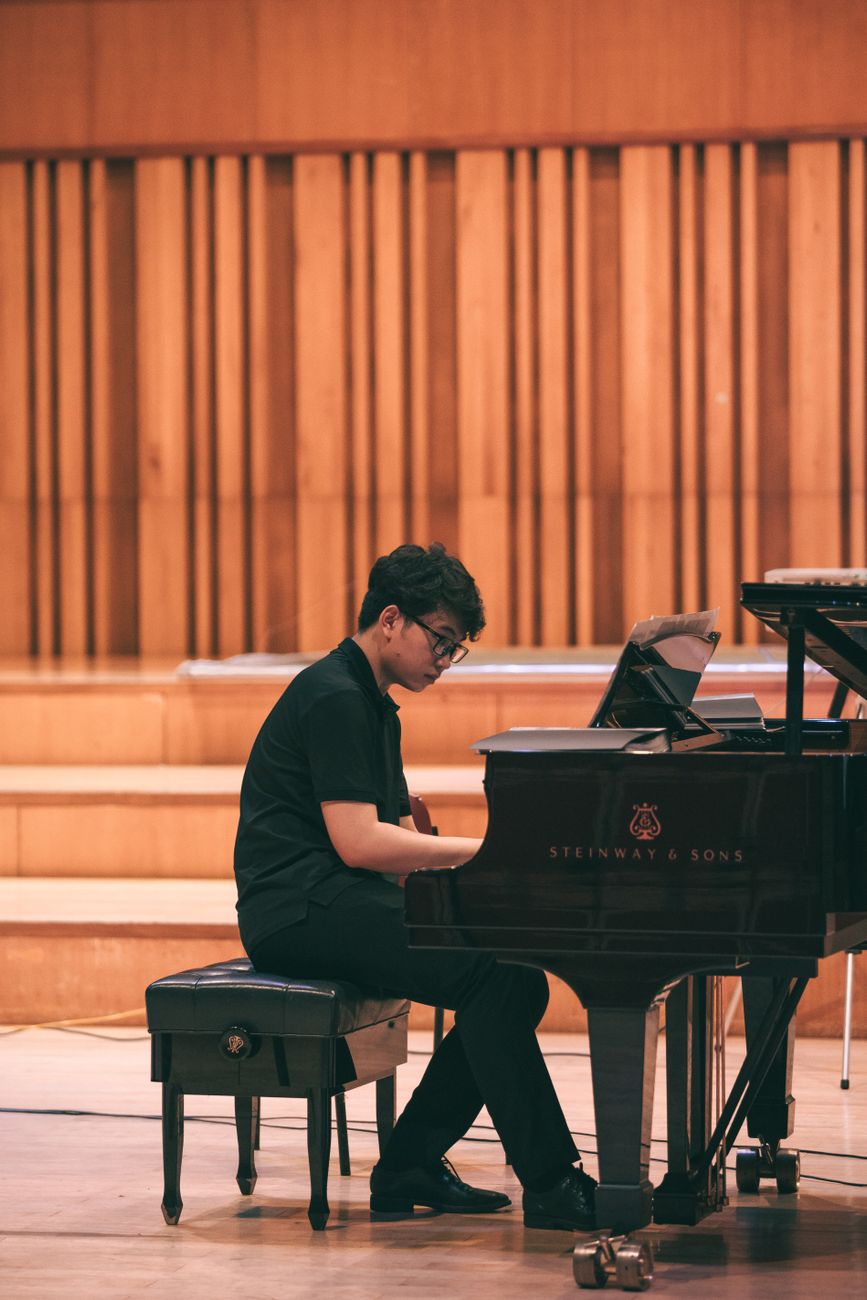
Classical piano performance, representing the elite arts-school world of Four Hands, Two Sonatas
Photo by Hou00e0ng Tiu1ebfn Viu1ec7t on Pexels.com

Meet the Cast: Song Kang, Lee Jun-young, and Jang Gyu-ri

Song Kang stars as Kang Pi-o, a technically flawless pianist raised under the intense expectations of his grandfather, celebrated conductor Kang Seung-woon (Jung Jin-young). This marks Song Kang’s first drama since completing his mandatory military service, following his star turns in Sweet Home, My Demon, and a buzzy queer-coded cameo as a classical pianist in the film Escape.

Lee Jun-young plays Choi Jeong-yo, a musically instinctive classmate from a financially struggling background whose difficult childhood kept him from ever properly training. Where Pi-o controls every note, Jeong-yo plays by feel, a contrast that becomes the emotional engine of the whole series.

Rounding out the central trio is Jang Gyu-ri, a former member of K-pop group fromis_9, as Hong Jae-in, a viola major who has quietly admired Pi-o’s playing since childhood and becomes a close friend to both pianists as their rivalry deepens. Supporting cast members include Yoon Se-a as Pi-o’s mother Kang Ji-hye and Kim Ju-hun as investigator Do Hyeon-su.

Actor Lee Jun-young, who plays piano prodigy Choi Jeong-yo in Four Hands, Two Sonatas
Photo: Marie Claire Korea / Wikimedia Commons (CC BY 3.0)

The Prague Competition That Changed Everything

The first half of the series plays out as a fairly familiar music-school rivalry: Pi-o and Jeong-yo are forced to practice a four-hands piece together, and grudging respect slowly turns into real friendship. That changes in episode 5, when both pianists travel to Prague for the Harmonie International Competition.

Desperate to prove himself to his grandfather, Pi-o pushes himself, and Jeong-yo, to the breaking point. The competition ends in tragedy: Jeong-yo is kidnapped and falls into a river, his fate left unknown as the story jumps forward roughly a decade.

Actor Jang Gyu-ri, who plays viola student Hong Jae-in in Four Hands, Two Sonatas
Photo: K-POPIT 케이팝잇 / Wikimedia Commons (CC BY 3.0)

Who Is Luca Domenico? Jeong-yo’s Shocking Return

By episode 6, Pi-o has become a world-renowned but deeply unhappy musician who has spent years quietly searching for the truth about what happened to his friend. He eventually discovers that Jeong-yo is alive, resurfaced under a new name, Luca Domenico, as a celebrated orchestra conductor.

When the two finally meet again in episode 7, Jeong-yo greets Pi-o with cold detachment, claiming he barely remembers their shared past and refusing an emotional reunion. It’s an obvious front: by episode 10, Jeong-yo is channeling his own trauma from the kidnapping directly into his music, using an original composition called Nemesis to force Pi-o to confront exactly what his obsession cost them both.

The Kidnapping Twist: Who Really Wanted Jeong-yo Gone

The show’s biggest gut-punch arrives in episode 9: Pi-o’s own mother, Kang Ji-hye, confesses that she was the one who ordered Jeong-yo’s kidnapping years earlier. Her reasoning is as chilling as it is understandable from a parent’s warped logic: she feared that if Pi-o lost to Jeong-yo in Prague, he would give up on piano entirely, so she had his biggest rival removed from the competition instead.

Her actions never went public, and as of episode 10, both the fallout for Kang Ji-hye and whether Jeong-yo will ever expose her remain unresolved, setting up a genuinely tense final stretch of episodes heading into the finale.

What to Expect From the October 4 Finale

With only episodes 11 and 12 left, airing October 3 and 4, Four Hands, Two Sonatas still has plenty of loose threads to tie up: will Jeong-yo publicly expose Kang Ji-hye’s crime, can Pi-o and Jeong-yo salvage their friendship after everything that’s happened, and does Jae-in’s quiet feelings for Pi-o finally come to a head? Fan reactions online have been split between hoping for a bittersweet, earned reconciliation and bracing for a much darker ending, given how hard the show has leaned into tragedy since the Prague-competition twist.

Frequently Asked Questions

Is this Song Kang’s first drama since finishing military service?

Yes. Four Hands, Two Sonatas is Song Kang’s first full leading role since completing his mandatory military service, following his earlier hits like Sweet Home and My Demon.

Where can I watch Four Hands, Two Sonatas?

The series streams globally on Netflix, with new episodes releasing every Saturday and Sunday. In South Korea, it also airs on tvN and streams on TVING.

Will there be a Four Hands, Two Sonatas Season 2?

As of the show’s original run, tvN and Netflix have not announced a second season. Since the finale hadn’t aired yet at the time of writing, any renewal decision would likely come only after the show wraps up in October.

From a classic music-school rivalry to a kidnapping mystery involving a conductor hiding behind a new identity, Four Hands, Two Sonatas has turned into one of the more unpredictable K-dramas of the year, and Song Kang’s post-military comeback couldn’t have picked a bigger swing. With the finale just days away, now’s the perfect time to catch up before everyone’s talking about how it ends.

For more K-drama recaps, K-pop news, and Korea travel guides, check out our About page.

Read more about the cast and story on the show’s Wikipedia page.

New Recruit 4: Sabotage: Everything to Know About K-Drama’s Record-Breaking Military Comedy Before the Finale

Actor Lee Won-jung, who plays the mysterious new recruit Kim Hyun-wook in New Recruit 4: Sabotage, the K-drama military comedy heading into its finale

New Recruit 4: Sabotage is the K-drama military comedy everyone in Korea is suddenly talking about, and its September 29 finale is only days away. The fourth season of ENA’s long-running “New Recruit” franchise follows newly-promoted corporal Park Min-seok as a mysterious ace recruit, a modernizing new commander, and a tense rivalry-turned-alliance with the marines shake up his unit. Since its August 24 premiere, the show has climbed to a record-breaking 4.6% nationwide rating for the franchise, making it one of the buzziest military comedies on Korean TV right now. If you’re just discovering the series, or you’ve been watching and want the full picture before the finale, here’s everything international K-culture fans need to know about the cast, the real web-animation origins, the biggest moments so far, and where to stream it outside Korea.

What Is New Recruit 4: Sabotage About?

“New Recruit” is a hyper-realistic military black comedy that began as a YouTube web-animation and has aired four live-action TV seasons on ENA since 2022. Season 4, subtitled “Sabotage,” picks up with Park Min-seok (Kim Min-ho) now promoted to corporal for the second half of his mandatory service. Just when he hopes for a quieter run, a new recruit named Kim Hyun-wook (Lee Won-jung) arrives, an efficient, exceptionally skilled soldier who was Min-seok’s fellow trainee back at boot camp and is hiding a secret tied to Min-seok’s past. At the same time, a new battalion commander, Byeon Hyeok-jin, pushes to modernize the barracks, forcing company commander Jo Baek-ho (Oh Dae-hwan) into difficult calls, while former private Choi Il-goo returns to the unit, this time as a sergeant who has to navigate his old friendships from the other side of the rank line.

Actor Lee Won-jung, who plays the mysterious new recruit Kim Hyun-wook in New Recruit 4: Sabotage
Photo: K-POPIT 케이팝잇 / Wikimedia Commons (CC BY 3.0)

Meet the Cast: Who’s Who in the Second Company

The cast blends returning franchise favorites with new arrivals. Kim Min-ho reprises Park Min-seok, the corporal whose privileged background as “the general’s son” has followed him through three previous seasons. Lee Won-jung, fresh off Netflix’s “Hierarchy,” plays the new recruit Kim Hyun-wook, whose exemplary record hides an untold history connected to Min-seok. Oh Dae-hwan returns as company commander Jo Baek-ho, the long-suffering officer who has to keep the unit together under pressure from above, while Nam Tae-woo’s Choi Il-goo, once a lowly private, now returns as a sergeant caught between his old bonds with the enlisted men and his new authority. Lee Hyun-kyun plays incoming battalion commander Byeon Hyeok-jin, whose push to “modernize the barracks” becomes a major source of season 4’s conflict, and Kim Dong-jun rounds out the unit as Jeon Se-kye.

Actor Oh Dae-hwan, who plays company commander Jo Baek-ho in New Recruit 4: Sabotage
Photo: K-POPIT 케이팝잇 / Wikimedia Commons (CC BY 3.0)

From a YouTube Web-Animation to Korea’s Longest-Running Military Comedy

What makes “New Recruit” different from most military K-dramas is where it came from. The franchise is adapted from a YouTube animated series by creator Jang Bbi-jju (장삐쭈), whose sketches about the absurdities of mandatory Korean military service built a huge online following before ENA turned it into a live-action show in 2022. Each season has followed the same core unit through different chapters of Park Min-seok’s service, from raw private to, now, seasoned corporal, letting original cast members age into new ranks alongside the character. That continuity is part of the appeal: Season 4 rewards long-time viewers by flipping the dynamic, with Choi Il-goo, once bullied as a rookie, now issuing orders to soldiers newer than he once was. New viewers can still follow Season 4 on its own, but the show’s writers clearly lean on four seasons of built-up history between these characters.

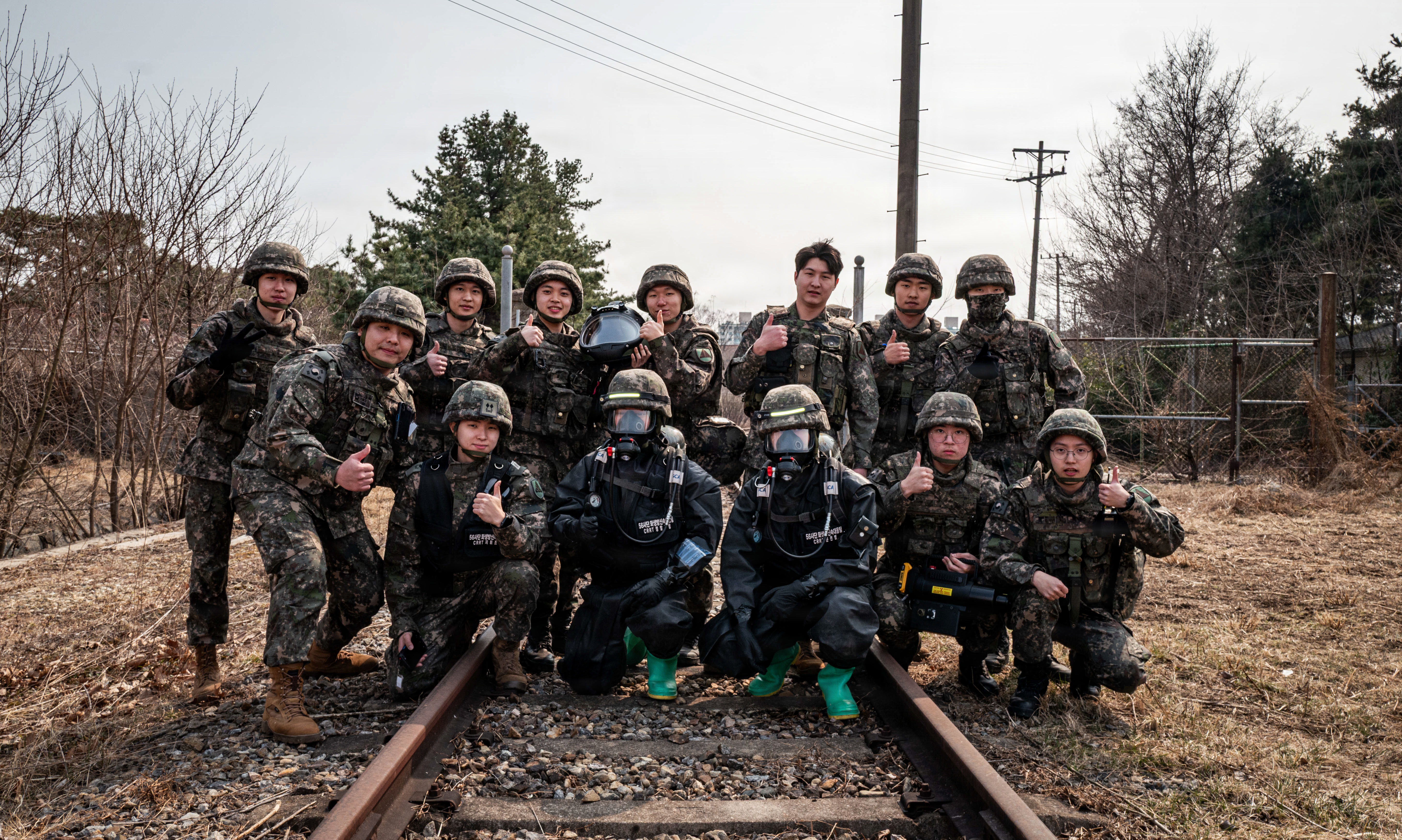
Republic of Korea Army soldiers during a joint training exercise, illustrating the real military setting behind the New Recruit comedy franchise
Photo: U.S. Army photo by Sgt. Charles Leitner / Wikimedia Commons (Public Domain)

Inside the Record-Breaking Ratings and the Marines Storyline

New Recruit 4: Sabotage has been breaking its own franchise’s ratings records as it airs, hitting a nationwide 4.6% (Nielsen Korea, paid households) by mid-September, the highest mark the series has posted. A big part of the momentum has come from the show’s ongoing rivalry-turned-teamwork arc between Min-seok’s Second Company and a visiting unit of Republic of Korea Marines. Episodes 7 and 8 set up a tense, comedic clash between the two units during a joint “Hoguk” military exercise, and by episodes 9 and 10, that friction resolved into an unexpectedly moving sequence, with the soldiers and marines completing a mountain rescue mission together and building real camaraderie after their rough start. It’s the kind of tonal swing between slapstick and genuine emotion that has defined the “New Recruit” franchise since its animated origins, and it’s a big reason critics and fans keep pointing to Season 4 as the strongest entry yet.

Republic of Korea Marines during a live-fire training exercise, echoing the marine storyline in New Recruit 4: Sabotage
Photo: Cpl. Peyton Kahle / Wikimedia Commons (Public Domain)

What to Expect From the September 29 Finale

With the finale airing September 29 in Korea, reporting on the back half of the season has teased a suspenseful final stretch: more marine-unit clashes, heartfelt farewells as characters near the end of their service, and a “hidden sabotage” plot thread finally coming to light, a fitting payoff for a season subtitled “Sabotage.” Given the mystery still surrounding Kim Hyun-wook’s connection to Min-seok’s past, expect the finale to resolve exactly what he’s been hiding and how it reshapes the Second Company’s dynamic one last time. True to the franchise’s tone, though, don’t expect a dark, twisty ending, “New Recruit” has always balanced its sharper social commentary about military life with genuine warmth for its characters, and past seasons have wrapped up with a mix of laughs and sentimental send-offs rather than cliffhangers.

Where to Watch New Recruit 4: Sabotage Outside Korea

International fans don’t have to wait for a same-day Korean broadcast to catch up. Rakuten Viki carries New Recruit 4: Sabotage with English and a dozen other subtitle languages, with new episodes rolling out on the platform’s own schedule after they air on ENA. In Japan, U-NEXT picked up the season as a day-and-date exclusive alongside its South Korean premiere. Availability and subtitle languages can vary by region, so check Viki’s regional catalog if you don’t see it right away. Since Season 4 builds directly on relationships from the earlier seasons, especially Choi Il-goo’s arc and Min-seok’s family baggage, it’s worth starting from New Recruit Season 1 if you want the jokes and callbacks to land the way longtime Korean viewers are experiencing them.

Frequently Asked Questions

Do I need to watch the previous New Recruit seasons first?

You can follow Season 4 on its own since it stands alone as a story, but it helps to have seen at least Season 1 (2022). Several running gags, Min-seok’s family connections, and Choi Il-goo’s return as a sergeant all land better with that background, and the franchise is built around watching this specific unit change over time.

Is New Recruit 4: Sabotage based on a true story?

Not a specific true story, but it is rooted in real experience. The franchise began as creator Jang Bbi-jju’s YouTube animation satirizing everyday absurdities of South Korea’s mandatory military service, and the live-action version keeps that hyper-realistic, semi-autobiographical spirit rather than depicting an actual unit or real events.

When and where can international fans watch the finale?

The finale airs in Korea on September 29, 2026, on ENA. International viewers can stream the season, including new episodes as they’re added, on Rakuten Viki with English subtitles, or on U-NEXT in Japan, which carries the show day-and-date with its Korean broadcast.

New Recruit 4: Sabotage has turned a decade-old YouTube joke into one of Korea’s most-watched military comedies, and it’s earned that record-breaking rating by balancing slapstick barracks humor with real heart between its cast of returning and new soldiers. With the marine rivalry resolved into camaraderie and Kim Hyun-wook’s secret still unspoken, the September 29 finale has plenty left to pay off. Whether you catch up before then or wait for the full season to land internationally, it’s a genuinely funny, surprisingly moving watch for anyone curious about Korea’s mandatory military culture.

Learn more about KWaveDaily on our About page.

For the official rundown of Season 4’s cast and characters, see Wikipedia’s New Recruit Season 4 page.

Made in Korea Season 2: The Real 1979 History Behind Hyun Bin’s Political Thriller

Actor Hyun Bin, who stars as Baek Ki-tae in Made in Korea Season 2, the biggest-budget K-drama political thriller of 2026

Made in Korea Season 2 has become the K-drama everyone’s talking about this September, and it’s not just because Hyun Bin returns as the ruthless KCIA operative Baek Ki-tae. The Disney+ and Hulu political thriller, reportedly one of the most expensive Korean dramas ever produced, weaves its fictional power struggle directly into a real, dramatic chapter of South Korean history: the 1979 assassination of President Park Chung-hee. If you’ve been wondering how much of Made in Korea Season 2 is actually true, here’s the real 1970s history behind the show, from the KCIA’s rise to the shocking dinner that changed the country forever.

What Is Made in Korea Season 2 About?

Made in Korea Season 2 picks up nine years after the first season’s finale, moving the story into 1979. Baek Ki-tae (Hyun Bin) is no longer a mid-level KCIA agent smuggling drugs on the side; he’s now Deputy Director of the agency, holding real institutional power. His long-time rival, former prosecutor Jang Geon-young (Jung Woo-sung), returns from years away to close in on him, while Ki-tae’s own younger brother, Baek Ki-hyun (Woo Do-hwan), gets pulled into the fight from the opposite side of the law. The season uses the 1979 assassination of President Park Chung-hee as the backdrop for a power vacuum that all three men scramble to exploit.

Is Made in Korea Based on a True Story?

Made in Korea blends real history with fictional characters. Baek Ki-tae, his family, and the specific drug-smuggling and political-assassination-plot storylines are all invented for the show. But the world around them is grounded in real events: the KCIA really did wield enormous, largely unchecked power in 1970s and ’80s South Korea, and President Park Chung-hee really was assassinated in October 1979 by his own intelligence chief. The show uses that real turning point in Korean history as the engine for its fictional power struggle, rather than trying to dramatize the actual assassination plot beat for beat.

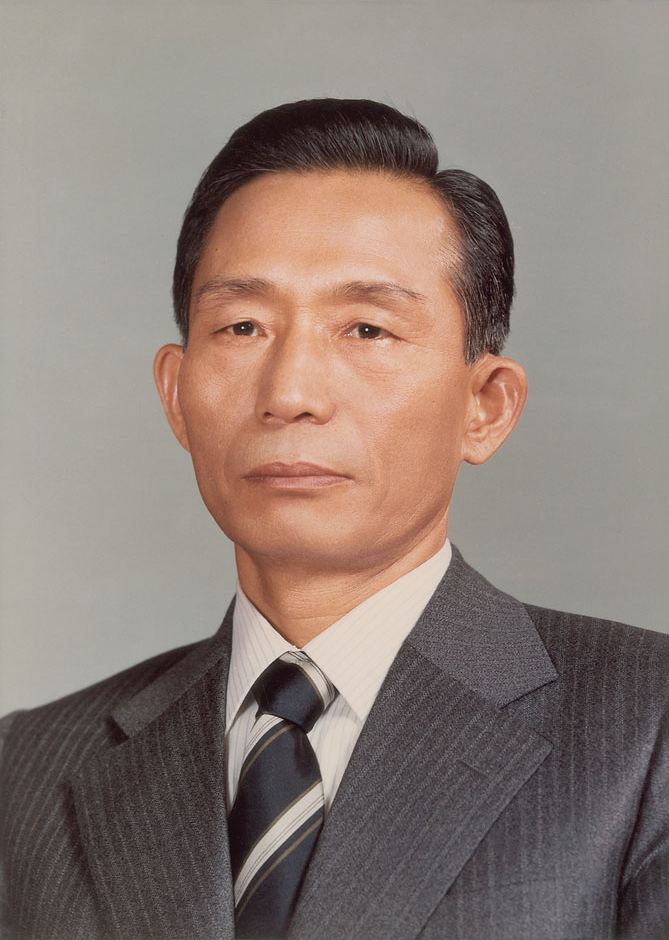
Official presidential portrait of South Korean President Park Chung-hee, whose 1979 assassination is the real historical backdrop for Made in Korea Season 2
Photo: Korea.net / Korean Culture and Information Service, via Wikimedia Commons (CC BY-SA 2.0)

The Real 1979 Assassination of President Park Chung-hee

On October 26, 1979, President Park Chung-hee, who had ruled South Korea for 18 years, was shot dead during a private dinner at a KCIA safehouse near the Blue House. The shooter was Kim Jae-gyu, his own KCIA director and one of his closest allies. After a tense exchange about how to handle growing anti-government protests, Kim left the room, returned with a handgun, and shot both Park and the president’s chief bodyguard, Cha Ji-cheol. Park’s rigid authoritarian Yushin era ended in that single moment, plunging the country into a power vacuum that eventually led to a new military coup that December. Kim Jae-gyu was tried, convicted, and executed in 1980; his family has pursued a retrial for decades, arguing he acted to restore democracy rather than seize power himself.

Cheong Wa Dae (the Blue House), the seat of the South Korean presidency, near where President Park was killed in 1979
Photo: Republic of Korea / Jeon Han, KOCIS, via Wikimedia Commons (CC BY-SA 2.0)

The KCIA’s Real History of Fear and Power in 1970s Korea

The Korean Central Intelligence Agency, founded in 1961, was the tool President Park used to consolidate and hold onto power for nearly two decades. Under Park’s Yushin Constitution of 1972, the KCIA had sweeping authority to surveil politicians, journalists, and ordinary citizens, and it operated with almost no outside oversight. That real unchecked power is exactly what Made in Korea Season 2 dramatizes through Ki-tae’s rise: a KCIA official who uses his badge as cover for a criminal empire is fiction, but the agency’s real-world reputation for corruption, intimidation, and backroom deal-making is very much rooted in fact. Even the show’s broader political intrigue, alliances between generals, prosecutors, and spies jockeying for position after Park’s death, mirrors the genuinely chaotic scramble for power that followed the real assassination, culminating in Chun Doo-hwan’s military coup that December.

Actor Woo Do-hwan, who plays Baek Ki-hyun, Ki-tae's younger brother, in Made in Korea Season 2
Photo: K-POPIT 케이팝잇, via Wikimedia Commons (CC BY 3.0)

Where to Watch Made in Korea Season 2 (and When It Ends)

Made in Korea Season 2 is streaming exclusively on Disney+ and Hulu, with all six episodes released in pairs on September 9, 16, and 23, 2026. That means the season finale drops September 23, wrapping up the fight between Ki-tae, Geon-young, and Ki-hyun right as the show’s fictional storyline catches up with the real historical chaos of late 1979. Season 1’s six episodes are also available to stream if you want the full origin story of how Ki-tae first built his double life as a KCIA officer and smuggler before the story jumps forward nine years for Season 2.

FAQ: Made in Korea Season 2

Is Made in Korea based on a true story?

Partly. The main characters and their specific criminal plots are fictional, but the show is set against real events, including the KCIA’s real historical power and the actual 1979 assassination of President Park Chung-hee.

Where can I watch Made in Korea Season 2?

Made in Korea Season 2 is streaming on Disney+ and Hulu. Episodes are being released in pairs, with the final two episodes arriving on September 23, 2026.

Will there be a Made in Korea Season 3?

Disney+ has not yet announced a third season. Season 2 was designed to close out the story that began in Season 1, so any renewal decision will likely come after the finale’s reception is clear.

Made in Korea Season 2 works as pure political-thriller entertainment, but it hits harder once you know the real history underneath it. The KCIA’s real reach, President Park’s real assassination, and the real power vacuum that followed all give Ki-tae, Geon-young, and Ki-hyun’s fictional battle its weight. As the finale lands this week, it’s worth remembering that South Korea’s actual 1979 turning point was every bit as dramatic as anything happening on screen.

Learn more about KWaveDaily and what we cover

Read more about the real 1979 assassination on Wikipedia

The Scandal Ending Explained: Does Cho-won Really Die, and Who Wins Lady Cho’s Dangerous Game?

Women wearing traditional hanbok at Gyeongbokgung Palace in Seoul, evoking the Joseon-era setting of Netflix's The Scandal

Netflix’s new Joseon-era drama The Scandal ending explained is already the most-searched K-drama topic this week, and for good reason: the show dropped all eight episodes on September 18, 2026, and immediately delivered one of the most devastating finales of the year. Starring Son Ye-jin, Ji Chang-wook, and NANA, the series reimagines the 1782 French novel Les Liaisons dangereuses and Korea’s own 2003 film Untold Scandal as a dangerous wager between two aristocrats who treat other people’s hearts like a game. If you just finished the finale and are still processing what happened to Cho-won, Lady Cho, and Hui-yeon, here’s a full breakdown of how The Scandal ends and what it actually means.

What Is Netflix’s The Scandal About?

The Scandal follows Lady Cho Yun (Son Ye-jin), a brilliant noblewoman trapped by the limits Joseon society places on women, and her cousin Cho-won (Ji Chang-wook), the kingdom’s most notorious playboy. Bored and restless, Yun proposes a wager: if Cho-won can seduce An Hui-yeon (NANA), a young widow who has vowed lifelong chastity, Yun will finally sleep with him after years of refusing. If he fails, he must impregnate So-ok, the aspiring concubine of Yun’s husband, Lord Yoo. Directed by Jung Ji-woo, the eight-episode series is a Korean reimagining of the 1782 French novel Les Liaisons dangereuses, filtered through the same source material that inspired Korea’s own 2003 hit film Untold Scandal. What starts as a cruel game of manipulation slowly turns into something none of the three can control.

Women wearing traditional hanbok at Gyeongbokgung Palace in Seoul, the kind of Joseon-era royal palace setting seen in Netflix's The Scandal
Photo: Jeon Han / Korea.net, Wikimedia Commons (CC BY-SA 2.0)

Why Does Lady Cho Turn Against Hui-yeon?

As the wager drags on, Cho-won convinces Hui-yeon to slip away in the night, and everyone assumes she has taken her own life to preserve her honor as a widow. Her mother-in-law even pressures Lady Cho into petitioning the King for a memorial gate honoring Hui-yeon’s supposed sacrifice. There’s just one problem: Hui-yeon isn’t dead. She’s been secretly attending Catholic gatherings, and her new faith convinces her that suicide would be wrong. When she finally sleeps with Cho-won, she falls for him for real and decides she wants to live. But the King tasks Cho-won with finding Hui-yeon’s body to confirm the memorial gate request, putting Lady Cho’s cover story at risk. Yun’s solution is cold and simple: convince Hui-yeon to actually die so the lie becomes true. It’s the moment that reveals just how far Lady Cho will go to protect her own position.

Son Ye-jin, who stars as Lady Cho in Netflix's The Scandal, at the Bucheon International Fantastic Film Festival
Photo: 티비텐 TV10 / Wikimedia Commons (CC BY 3.0)

Does Cho-won Really Fall in Love With Hui-yeon, and Does He Die at the End?

Yes, in his own damaged way, Cho-won genuinely falls for Hui-yeon. Her honesty and quiet resolve give him a version of intimacy he never got from his manipulative bond with Yun. He goes as far as arranging a ferry to Yanjing (the historical name for Beijing) so the two of them can escape together with his loyal servant Chil-seong. But when Hui-yeon shows up at Lady Cho’s home not knowing Yun engineered the whole wager, Yun asks Cho-won point-blank who he chooses. He can’t leave her, even loving Hui-yeon as he does, and lets Hui-yeon walk into the night alone. To protect her, he later finds her and confesses the whole scheme was a bet from the start, a confession that shatters her but also frees her to live her own life instead of chasing him. Cho-won then covers for Lady Cho’s forged report to the King about Hui-yeon’s death, gets caught in the lie anyway, and is permanently banished from the King’s presence. Alone and out of options, he boards the ferry to Yanjing by himself, then jumps into the river mid-crossing. The boatman only finds his floating hat. The show never confirms whether he actually dies. His former servants keep wondering if he’s alive, and letters keep arriving at his old house months later, leaving his fate deliberately unresolved.

Ji Chang-wook, who plays Cho-won in Netflix's The Scandal, at a 2024 press conference
Photo: K-POPIT 케이팝잇 / Wikimedia Commons (CC BY 3.0)

What Happens to Hui-yeon, Lady Cho, and the Rest of the Cast?

Hui-yeon survives, but not happily. She keeps practicing her secret Catholic faith and has to flee into the night when a former servant recognizes her at a hidden service. She eventually visits Cho-won’s old home, where his loyal servant comforts her with tea and a stack of unsent letters from Lady Cho, without being able to offer the comfort of confirming he’s still alive. Lady Cho technically wins her game. She keeps her status, her comfortable household, and her marriage to Lord Yoo. But the finale’s last shot shows her alone at her writing desk with no one left to write to, a woman who has everything society told her to want and nothing she actually needed. So-ok, the concubine caught in the middle of the wager, ends up pregnant by her real love interest, In-ho, and seems happy for now, though the show hints her situation is far from secure. The one couple who gets something close to a real happy ending is Cho-won’s servants, Chil-seong and Eun-sil, whose freedom Cho-won purchased before disappearing. In the final episode, they’re shown together with a baby and a steady income, a quiet contrast to the miserable lives of the nobles who spent the whole series playing games with other people’s hearts.

NANA, who plays Hui-yeon in Netflix's The Scandal, at a 2025 photo call
Photo: 티비텐 / Wikimedia Commons (CC BY 3.0)

The Scandal: Frequently Asked Questions

Is The Scandal based on a true story?

No. The Scandal is a Korean adaptation of the 1782 French novel Les Liaisons dangereuses, filtered through the same source material that inspired Korea’s own 2003 film Untold Scandal. The Joseon-era setting, characters, and plot are fictional.

How many episodes does The Scandal have?

The Scandal has eight episodes, and Netflix released the entire season at once on September 18, 2026, so you can binge the whole story in one sitting.

Will there be a Season 2 of The Scandal?

Netflix has not announced a second season as of this writing. The ambiguous ending, which never confirms whether Cho-won survives, leaves the door open narratively, but nothing has been confirmed by Netflix or the production team.

The Scandal ending explained in one line: everybody technically survives the wager, but nobody actually wins it. Lady Cho keeps her status but loses the one person who understood her. Hui-yeon keeps her life but loses the future she wanted. And Cho-won, the one who finally tried to choose love over pride, disappears into the river before we ever find out if he gets to start over. It’s a bittersweet, morally messy finale that stays true to its 18th-century source material while giving Son Ye-jin, Ji Chang-wook, and NANA some of the best material of their careers.

Want more K-drama breakdowns like this one? Learn more about what KWaveDaily covers on our About page.

For the full cast, production credits, and background on The Scandal, check out its Wikipedia page.

My Bias, My Boss Ending Explained: Do Da-reum and Ha-gi Get Their Happy Ending?

Modern Seoul corporate office building at dusk, representing the workplace rom-com setting of My Bias, My Boss

My Bias, My Boss (최애의 사원) wrapped up its 12-episode run on tvN on September 8, 2026, and fans are still talking about how it stuck the landing. Based on the webtoon My Oppa Is an Idol, the workplace rom-com followed Nam Da-reum (Kim Hye-joon), a fangirl who joins a company hoping to be near her idol bias Lee-chan (Cha Woo-min), only to end up as the favorite employee of her strict CEO, Kang Ha-gi (Kang Hoon). Here’s

exactly how the finale resolves the love triangle, the corporate espionage subplot, and the fate of Lee-chan’s disbanded idol group DNX. Spoilers ahead.

Does Da-reum go to Paris?

In the back half of the season, Da-reum is offered a career opportunity in Paris. Ha-gi initially struggles with the idea of her leaving and privately worries about what the distance will do to their relationship, but he realizes holding her back out of fear isn’t fair to her. He encourages her to take it. Da-reum accepts the assignment and spends several months in Paris while staying in a long-distance relationship with Ha-gi. It becomes an important step in her arc too: by the end, she’s built a career and identity of her own, rather than just being known as ‘Lee-chan’s longtime fan.’

Paris cityscape at golden hour with the Eiffel Tower, representing Da-reum's career move abroad in My Bias, My Boss

Do Da-reum and Ha-gi end up together?

Yes. After Da-reum completes her Paris assignment, she returns to Korea and reunites with Ha-gi, proving her career ambitions didn’t have to come at the expense of the relationship. The finale completes Ha-gi’s arc too: instead of holding onto her out of fear of losing her, he learns to trust her and support her ambitions. He proposes, she accepts, and the two share a kiss. The finale doesn’t show a wedding, but the engagement gives the couple a clear, satisfying happy ending rather than another ambiguous reunion.

Romantic rooftop terrace overlooking Seoul at night, representing Ha-gi's proposal to Da-reum in the My Bias, My Boss finale

What happens to Lee-chan and DNX?

Lee-chan spends much of the back half of the show grappling with watching Da-reum’s feelings shift fully to Ha-gi. Once he accepts that she’s chosen his CEO, he redirects his focus to the thing that’s always been core to his identity: music. With Da-reum’s encouragement, he works to bring his disbanded idol group DNX back together. The finale pays this off with a full reunion concert after nine years apart, and Da-reum attends as an enthusiastic fan, in a nice full-circle moment: Lee-chan finds his way back to the stage, and Da-reum finds her own happy ending, both because they gave each other the courage to move forward.

K-pop concert stage with spotlights and crowd lightsticks, representing DNX's reunion concert in the My Bias, My Boss finale

What happens with the corporate espionage subplot?

The finale also resolves the show’s corporate thriller thread. Choi Sung-wook, an executive Ha-gi trusted completely, is revealed to have been secretly leaking Appello’s corporate secrets to rival company SE, a betrayal that shakes Ha-gi right before the finale. In the end, Sung-wook apologizes and admits he regrets acting as a spy. Crucially, it’s also revealed he never actually handed over Appello’s completed final proposal to SE. That last act of conscience is what allows Appello to recover and secure its collaboration with HAN, even though it doesn’t erase the betrayal itself.

Confidential business proposal documents on a boardroom table, representing the corporate espionage subplot in My Bias, My Boss

Will there be a My Bias, My Boss season 2?

As of this writing, there’s no official confirmation of a second season. The finale wraps every major thread, Da-reum and Ha-gi’s engagement, DNX’s reunion, and Sung-wook’s redemption, cleanly enough that the show reads as a complete, self-contained story rather than one built for a sequel. My Bias, My Boss is based on the webtoon My Oppa Is an Idol and aired its full 12-episode run on tvN from August 3 to September 8, 2026.

My Bias, My Boss joins a long line of K-dramas that turn idol fandom into genuine workplace romance, and its ending gives every major character a resolution instead of leaving threads dangling for a sequel that may never come. If you want to dig deeper into the cast and production details, check the show’s official entry, and browse our About page to see what kinds of K-drama and K-pop stories KWaveDaily covers.

View My Bias, My Boss on Wikipedia

Read More on Our About Page