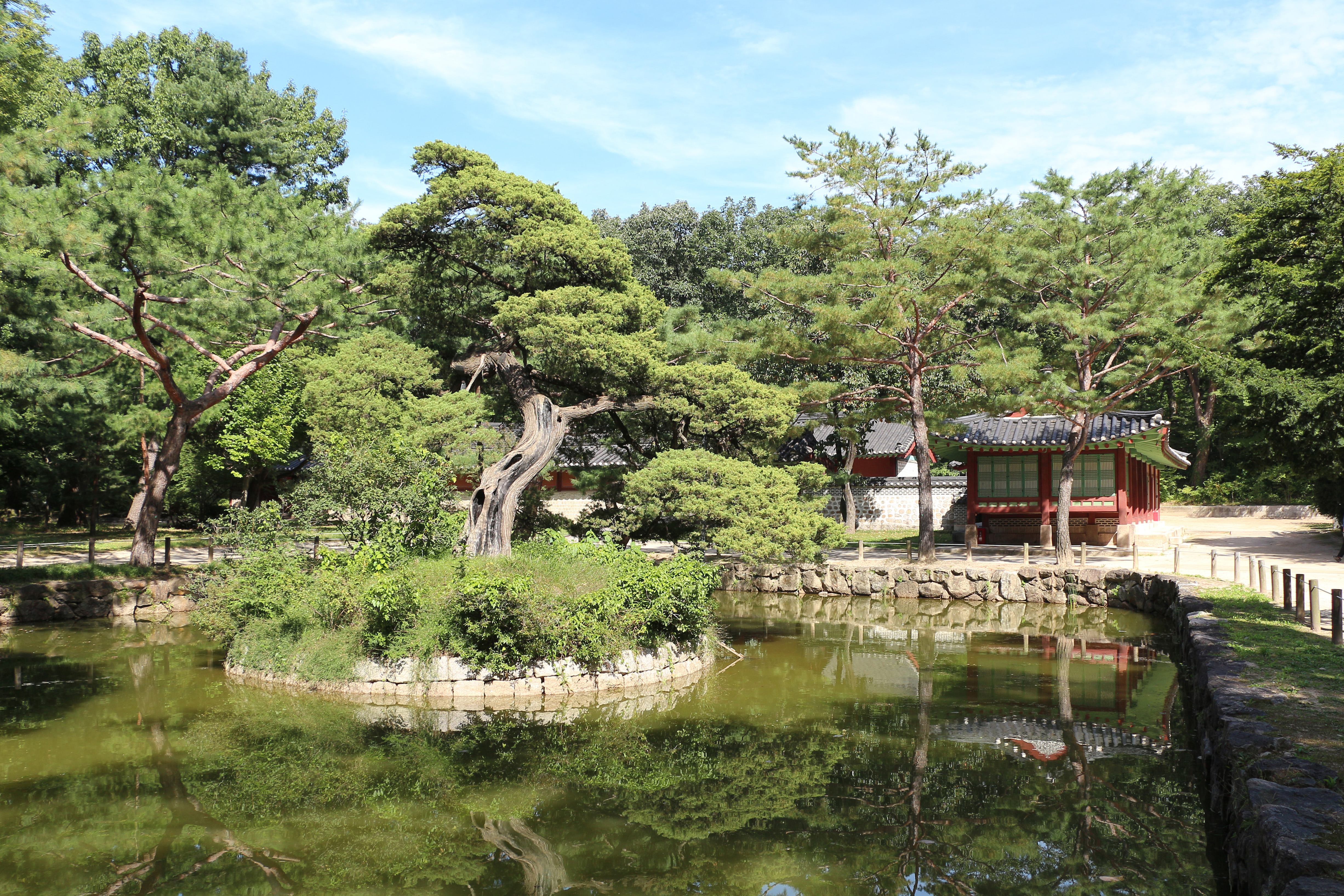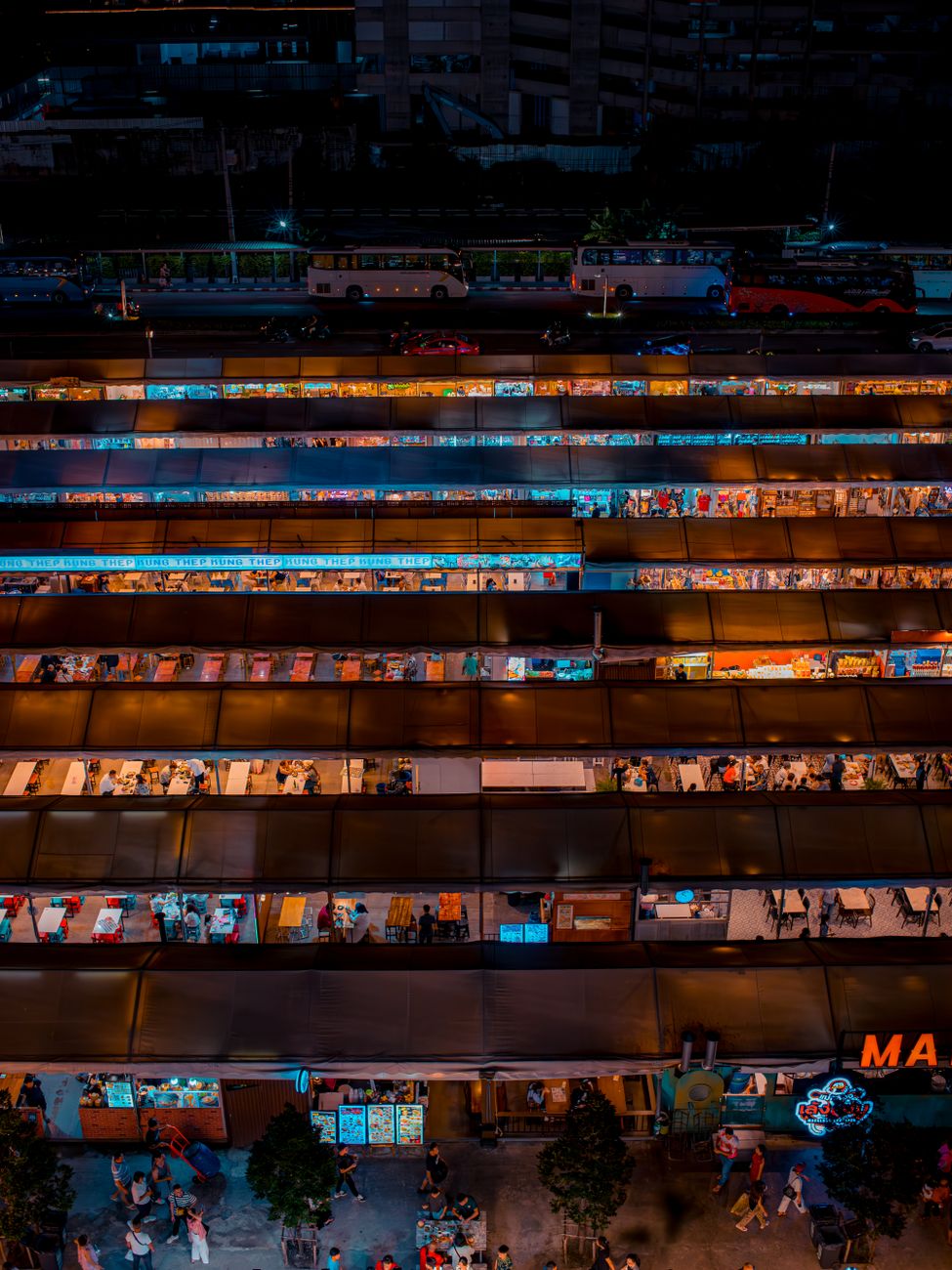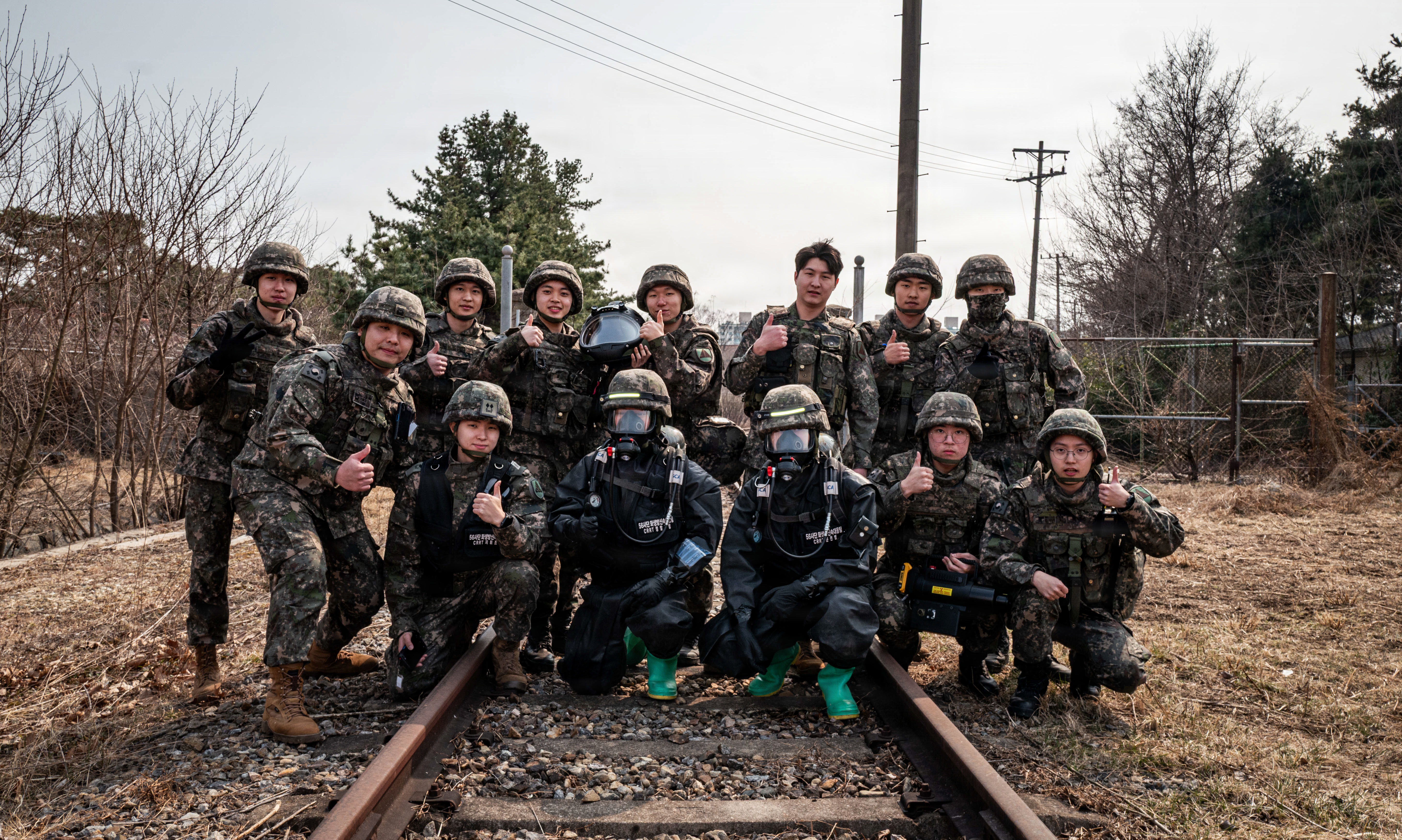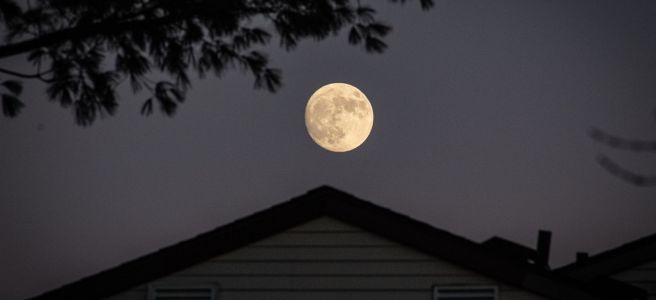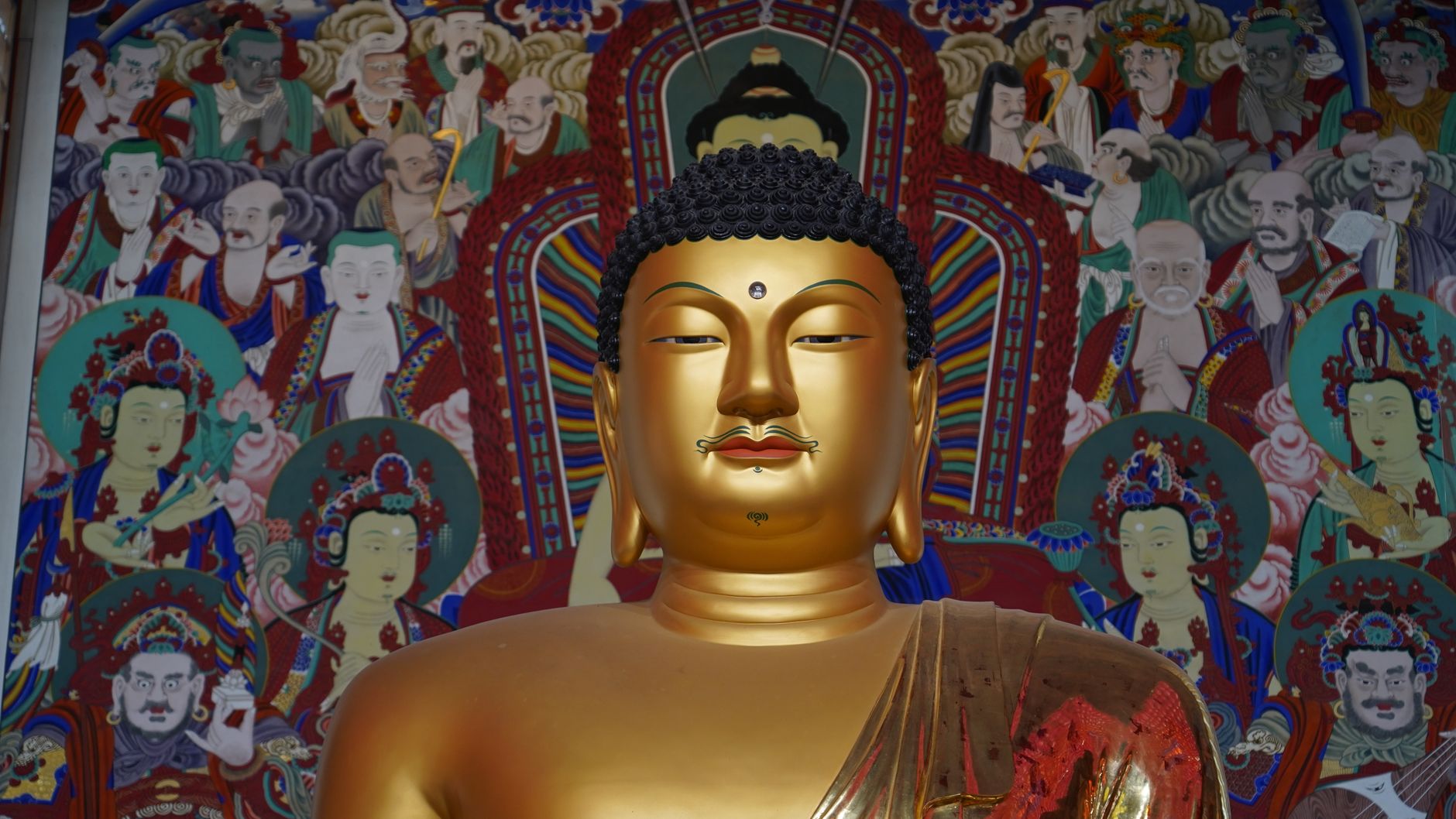
Jeju Island K-Drama Filming Locations: A Real Travel Guide to Tangerines and Samdal-ri Spots

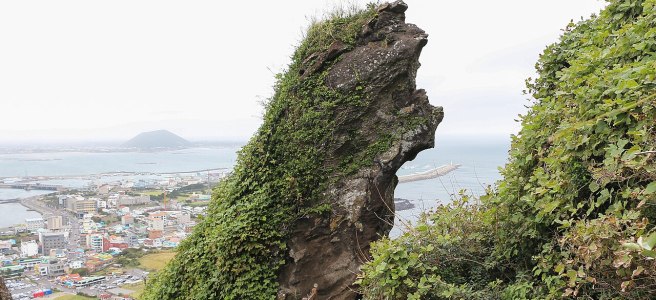
Seongsan Ilchulbong volcanic tuff cone (Sunrise Peak), Jeju Island, featured in When Life Gives You Tangerines

Jeju Island K-drama filming locations have quietly turned South Korea’s volcanic island into one giant open-air set, and two very different Netflix hits are the reason why. When Life Gives You Tangerines, TIME’s pick for Best K-Drama of 2025, and Welcome to Samdal-ri, the Ji Chang-wook and Shin Hye-sun romance that made small-town Jeju look irresistible, were both filmed almost entirely on real Jeju locations rather than studio sets. That means fans can retrace nearly every emotional scene in person. Here’s exactly where to go, what each spot looked like on screen, and how to fit them into one real Jeju itinerary.

Why Jeju Island Keeps Stealing the Show in K-Dramas

Jeju has been a magnet for Korean film and TV productions for decades, from Crash Landing on You to Our Blues, thanks to a landscape that barely looks real: black lava-rock coastlines, volcanic tuff cones, and canola and buckwheat fields that change color with the seasons. When Life Gives You Tangerines leans into that raw coastal beauty to tell a multi-generational love story starting in the 1950s, while Welcome to Samdal-ri uses Jeju’s small fishing villages as the literal hometown its heroine can’t stay away from. Both shows treat the island less like a backdrop and more like a main character, which is exactly why so many scenes were shot on real, visitable locations instead of a studio lot.

Seongsan Ilchulbong: The Sunrise Peak From When Life Gives You Tangerines

Seongsan Ilchulbong, a UNESCO World Heritage-listed volcanic tuff cone on Jeju’s eastern coast, is where the When Life Gives You Tangerines filming trail traditionally starts, since it’s one of the most recognizable single images of the show’s Jeju setting. Nicknamed Sunrise Peak, the tuff cone rises 182 meters straight out of the sea and takes about 20 to 30 minutes to climb via a steep staircase trail. Entry costs roughly 5,000 KRW for adults (about $4 USD), though arriving before the ticket booth opens around 7 AM often gets you in for free. At the base, you can also catch a free haenyeo (traditional woman diver) demonstration, a piece of real Jeju culture the drama itself pays tribute to throughout its story.

Gimnyeong Beach: Where the Haenyeo Divers Gather

Gimnyeong Beach, on Jeju’s northeast coast in Gujwa-eup, is where young Ae-sun and the haenyeo divers gather in early episodes of When Life Gives You Tangerines, and it’s easy to see why the crew chose it: the water is a striking turquoise over pale sand, framed by black volcanic rock. The beach sits along Jeju Olle Trail Route 20, a scenic coastal walking path, so it’s easy to combine a visit here with a longer stroll past nearby Pyeongdae-ri’s quieter coves. It’s one of the more low-key stops on this list too, free to visit, rarely crowded outside peak summer months, and a good place to just sit and watch the water for a while.
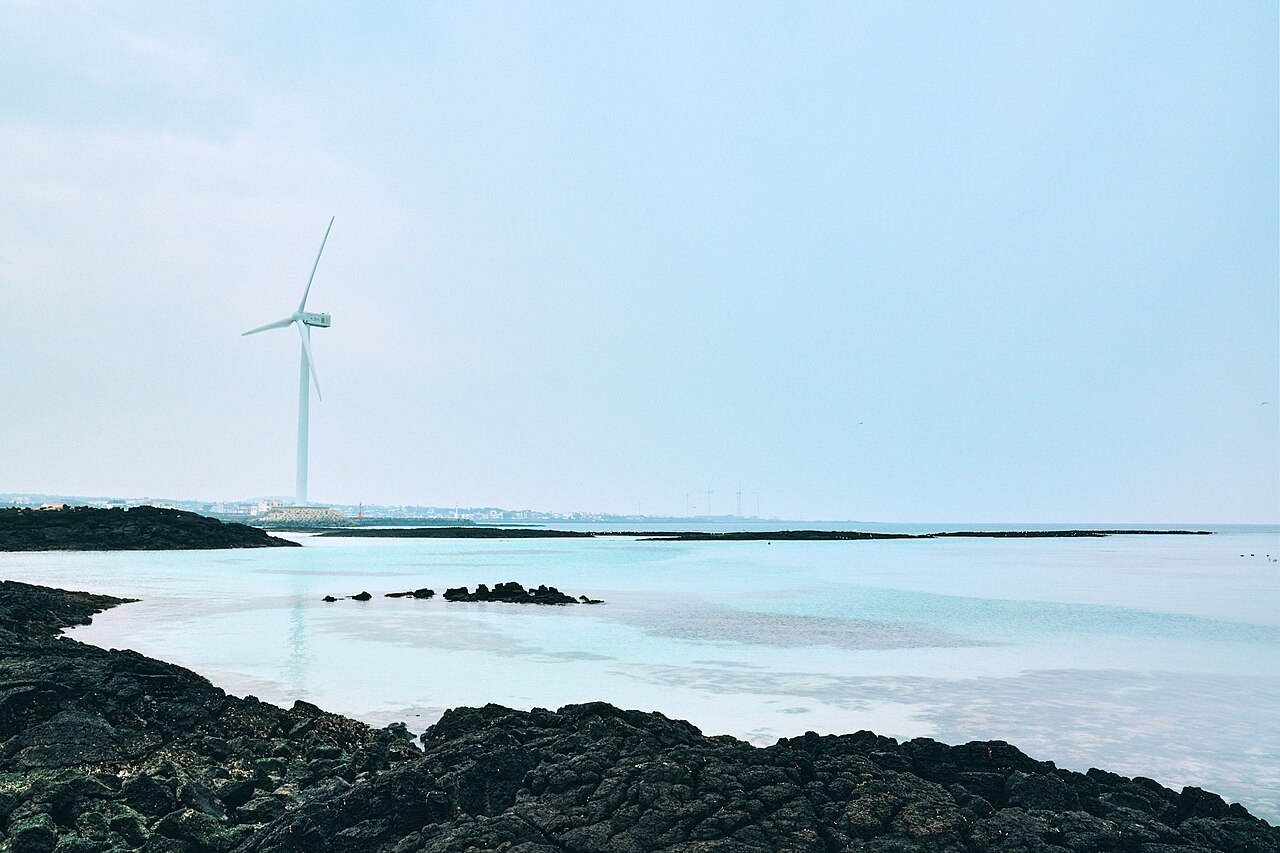
Jeju Olle Trail Route 20 coastal path passing Gimnyeong Beach, Jeju Island
Photo: Jeju Olle Foundation / Wikimedia Commons (CC BY-SA 4.0)

Seopjikoji: The Cinematic Cape From When Life Gives You Tangerines

A short drive south of Seongsan Ilchulbong, Seopjikoji is a dramatic grassy cape jutting into the sea, capped with a red-and-white lighthouse that’s become one of the most photographed spots on the island. It’s where some of the show’s most visually striking walk-and-talk scenes were filmed, and it’s easy to understand why directors keep coming back to it. Few places on Jeju combine cliffside ocean views, seasonal wildflower fields, and a lighthouse this photogenic in one location. Give yourself at least 30 to 45 minutes to walk the full loop out to the lighthouse and back.

Seopjikoji coastal cape road in Seongsan-eup, Jeju Island
Photo: song songroov / Wikimedia Commons (CC BY 3.0)

Ojo Port: Home of Samdal-ri’s “Lucky Convenience Store”

Ojo Port, a small working harbor in Seongsan-eup, is where Welcome to Samdal-ri built its Samdal-ri bus stop and Lucky Convenience Store sets, and unlike a lot of drama sets, the bus stop was never torn down, so it’s still standing for fans to photograph. The port itself is a quiet, unglamorous fishing harbor, which is exactly the point: it’s meant to feel like an ordinary hometown, not a tourist attraction, and that authenticity is a big part of why the show resonated. From here you also get a clear view across the water to Seongsan Ilchulbong, so it pairs naturally with a Sunrise Peak visit earlier in the day.
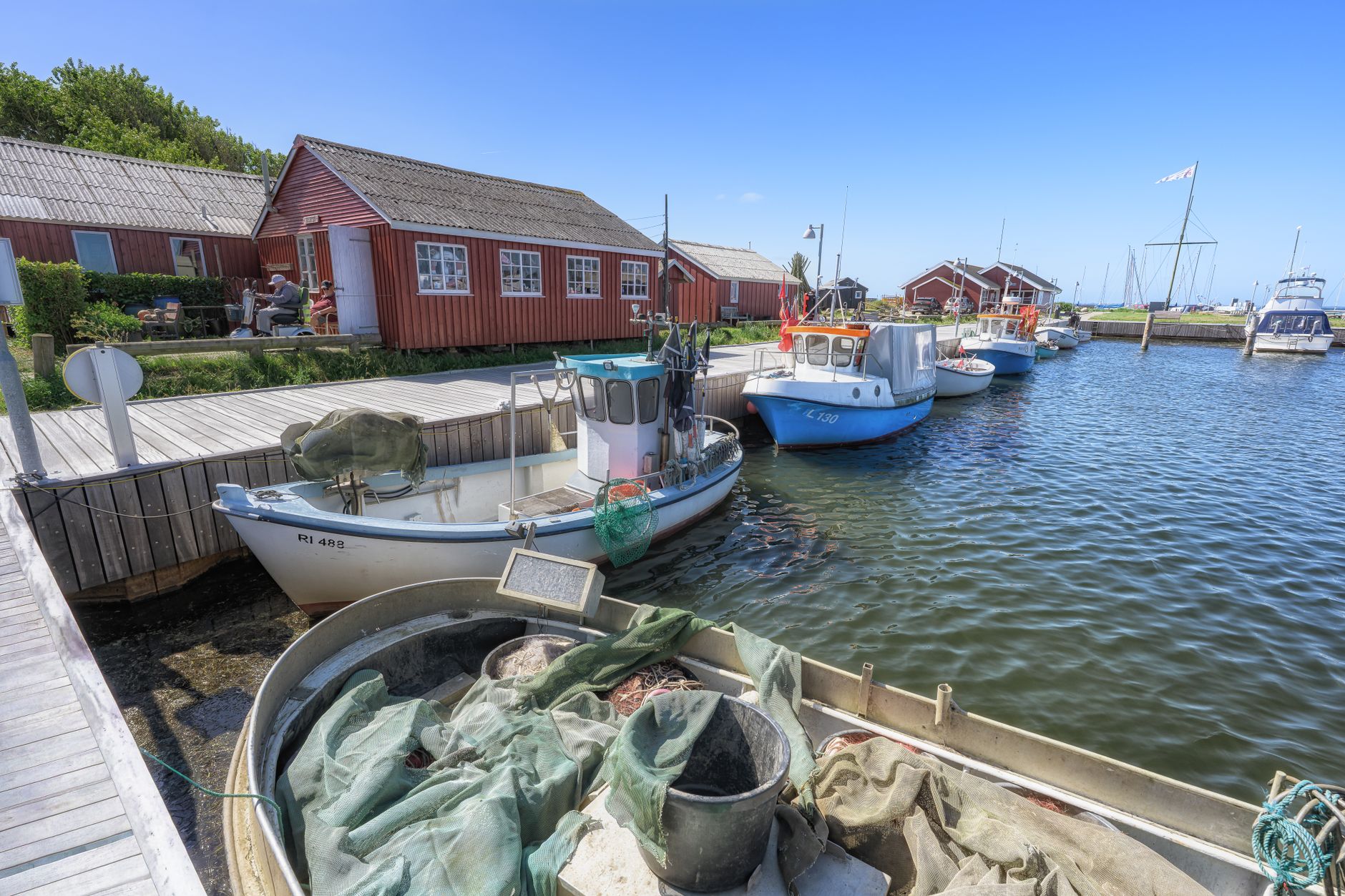
Small fishing harbor with boats, similar to Ojo Port on Jeju Island
Photo by Adriaan Westra on Pexels.com

Sinchang Windmill Coastal Road: Samdal and Yong-pil’s Sunset Walk

On the opposite side of the island in Hangyeong-myeon, the Sinchang Windmill Coastal Road lines up a row of wind turbines against the emerald sea, and it’s where some of Welcome to Samdal-ri’s most romantic coastal-walk scenes were shot. Locals and fans both recommend visiting about an hour before sunset, when the light turns golden and the turbines catch the glow, the same magical lighting the show’s own scenes are known for. It’s a working road rather than a formal park, so it’s free to visit any time and works well as a final stop before dinner if you’re driving the island’s west coast.
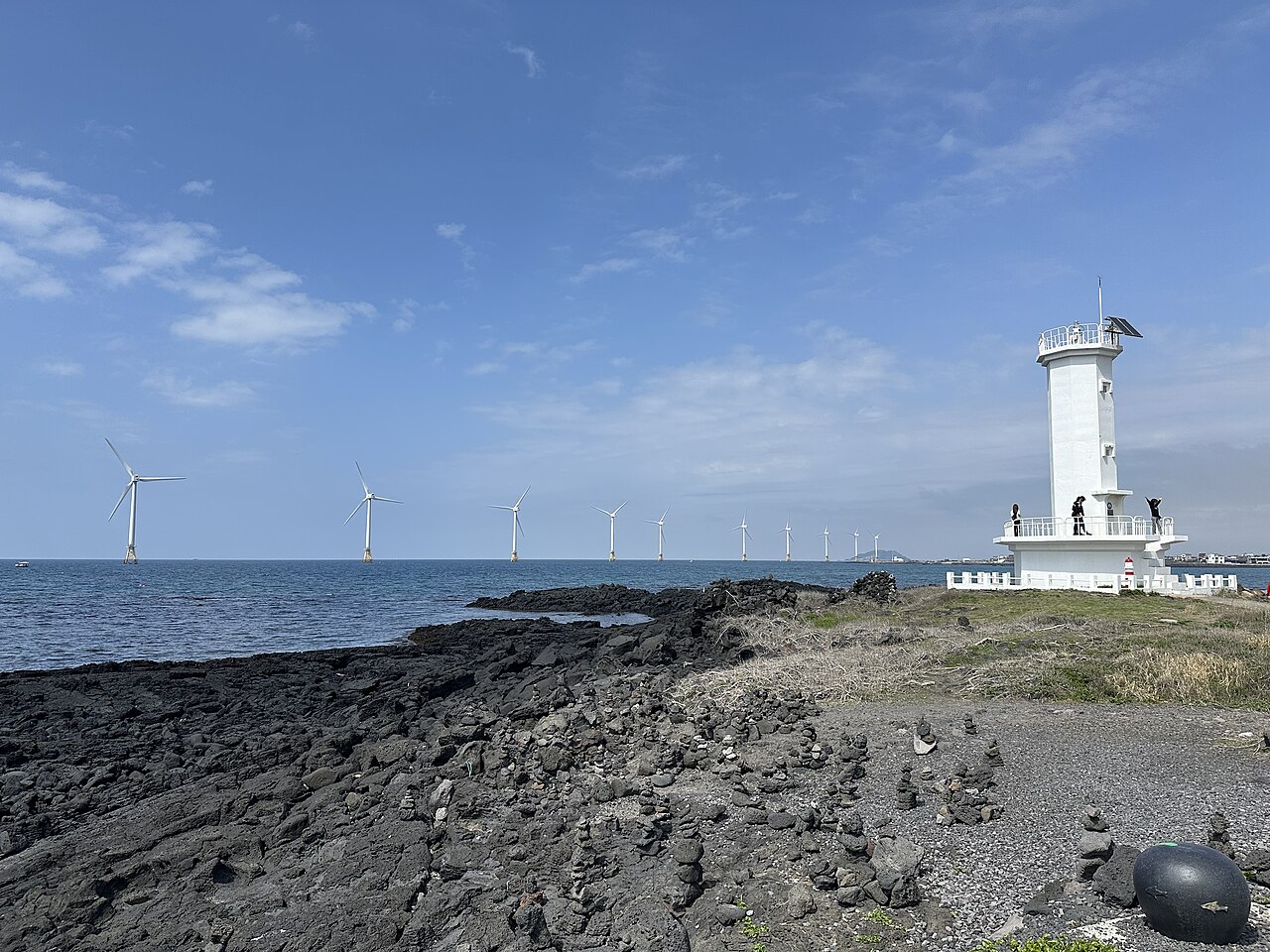
Sinchang Windmill Coastal Road with wind turbines along the sea, Jeju Island
Photo: Grapesurgeon / Wikimedia Commons (CC BY-SA 4.0)

Jeju-mok Government Office: A Joseon-Era Time Capsule

Back in Jeju City, the Jeju-mok Government Office is a meticulously restored Joseon-era administrative complex that appears in Episode 8 of When Life Gives You Tangerines, as the spot where young Ae-sun and Gwan-sik once sat writing poetry together, and where an older Ae-sun later returns to reminisce. Originally the seat of Jeju’s local government for centuries, the complex today functions as a small open-air museum of traditional Korean architecture, with restored halls and gates you can wander through at your own pace. It’s centrally located and inexpensive to enter, making it an easy add-on to a day of exploring Jeju City itself.
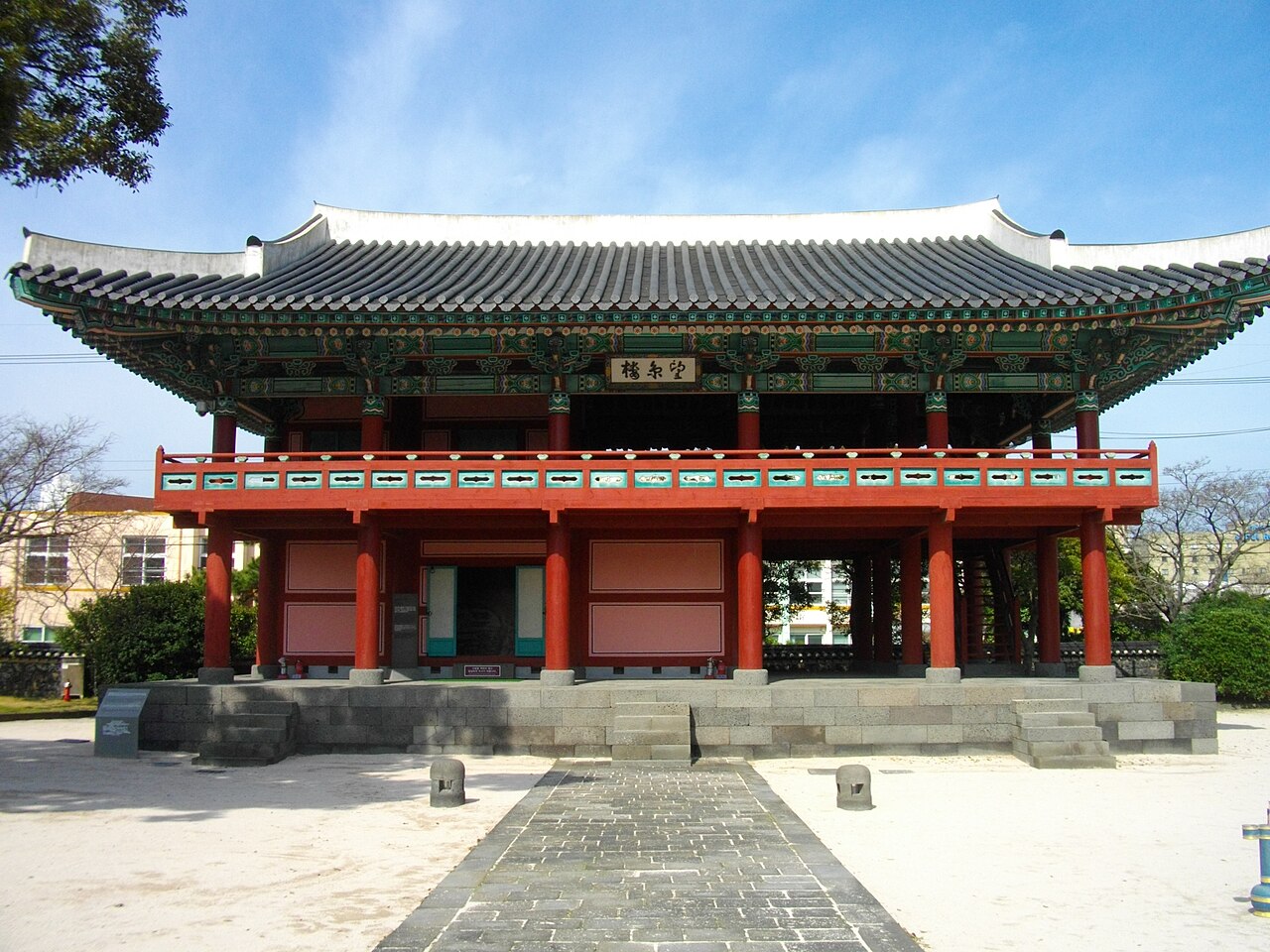
Jeju-mok Government Office restored Joseon-era administrative complex, Jeju City
Photo: Abasaa / Wikimedia Commons (Public domain)

Frequently Asked Questions About Jeju’s K-Drama Filming Locations

Are these Jeju K-drama filming locations free to visit?

Most of them are. Coastal roads, beaches, ports, and the Sinchang Windmill Coastal Road cost nothing to visit. Seongsan Ilchulbong and the Jeju-mok Government Office both charge a small entrance fee, usually in the 2,000 to 5,000 KRW range, which is minor compared to most paid attractions.

Do I need to rent a car to see them?

A car makes this trip far easier since the locations are spread across the eastern and western coasts, and South Korea does not let Google Maps offer turn-by-turn driving directions, so you’ll want Naver Map or KakaoMap installed instead. Buses do connect most of these spots, but expect longer travel times and more planning around timetables.

Which drama’s locations should I prioritize if I only have one day?

If you’re short on time, the eastern-coast cluster around Seongsan Ilchulbong, Seopjikoji, and Ojo Port covers locations from both dramas in a single, easy-to-drive loop without backtracking across the island.

Whether you’re chasing the multi-decade romance of When Life Gives You Tangerines or the hometown comfort of Welcome to Samdal-ri, the real payoff of visiting these spots is realizing how little Jeju needed to be dressed up for the cameras. The sunrise peaks, black-sand coves, and quiet fishing ports look almost exactly like they do on screen. Pair a couple of these stops with a slower, less scripted day exploring the island’s cafes and coastline, and you’ll come away with your own version of the story.

Read more K-culture travel guides on KWaveDaily’s About page.

Learn more about When Life Gives You Tangerines on Wikipedia.

Four Hands, Two Sonatas: Everything to Know About Song Kang’s Post-Military K-Drama Before the Finale

Actor Song Kang, who stars as pianist Kang Pi-o in Four Hands, Two Sonatas

Four Hands, Two Sonatas is one of the buzziest K-dramas of September 2026, marking Song Kang’s first leading role since finishing his mandatory military service two years ago. The tvN and Netflix series pairs Song Kang with rising star Lee Jun-young as two rival piano prodigies whose friendship survives a kidnapping, a secret identity, and a decade-long time jump. With the finale landing October 4, the story just delivered its biggest twist yet, so here’s everything K-drama fans need to know about the cast, the plot so far, and what those last two episodes might bring.

What Is Four Hands, Two Sonatas About?

Four Hands, Two Sonatas (포핸즈) is a 12-episode tvN and Netflix music drama that premiered August 29, 2026, releasing two new episodes every Saturday and Sunday through its October 4 finale. The title refers to a real piano technique where two pianists share a single keyboard to perform a duet together, a fitting metaphor for a story about two rival musicians whose lives become permanently intertwined.

The series spans a roughly 10-year arc, following elite pianist Kang Pi-o and his gifted rival Choi Jeong-yo from their teenage years at a prestigious arts high school into their late twenties. What starts as a classic prodigy-versus-underdog rivalry evolves into something far darker once the show’s central mystery kicks in around the midpoint, and by mid-September the drama had climbed to the number one spot on Good Data Corporation’s weekly buzzworthy-drama ranking, with Lee Jun-young and Song Kang topping the most-buzzworthy-cast-member list too.

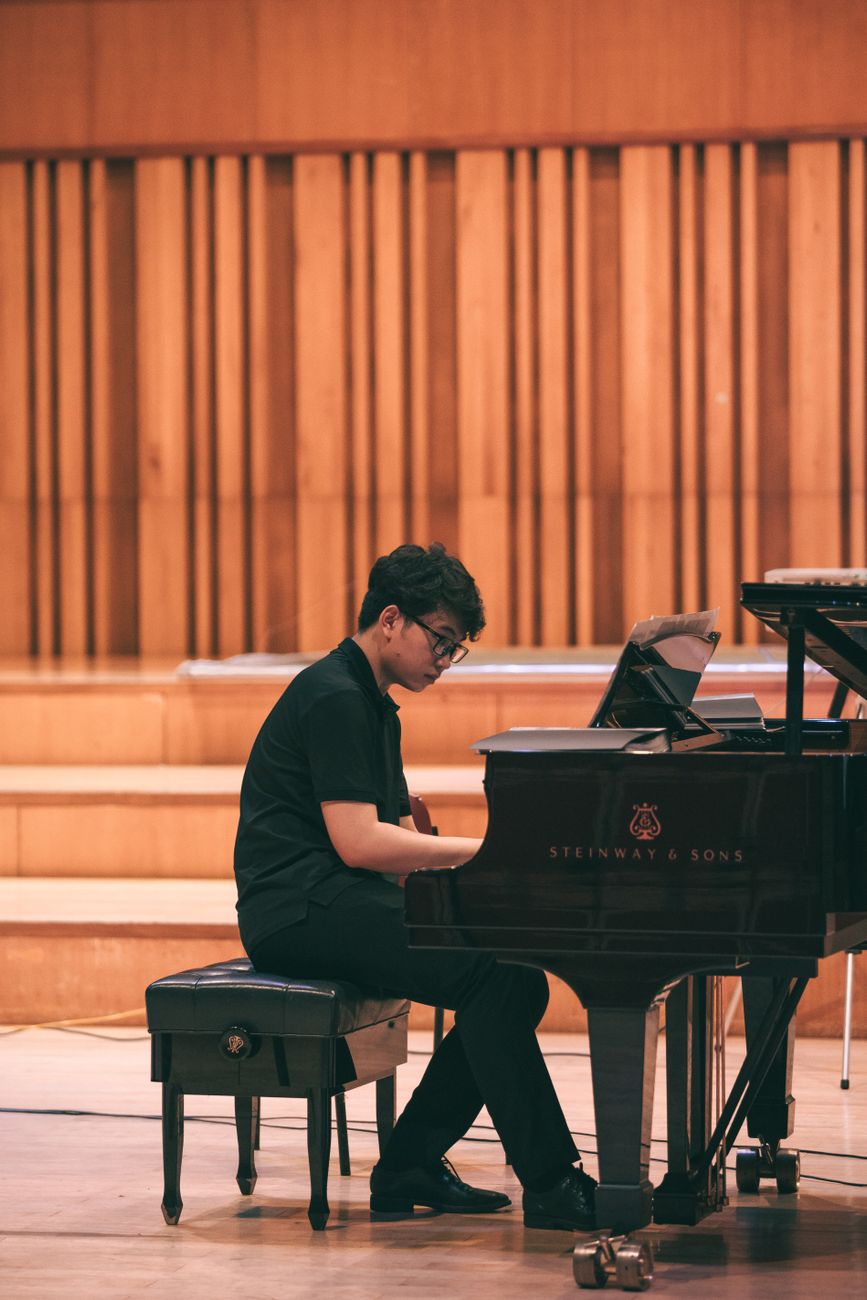
Classical piano performance, representing the elite arts-school world of Four Hands, Two Sonatas
Photo by Hou00e0ng Tiu1ebfn Viu1ec7t on Pexels.com

Meet the Cast: Song Kang, Lee Jun-young, and Jang Gyu-ri

Song Kang stars as Kang Pi-o, a technically flawless pianist raised under the intense expectations of his grandfather, celebrated conductor Kang Seung-woon (Jung Jin-young). This marks Song Kang’s first drama since completing his mandatory military service, following his star turns in Sweet Home, My Demon, and a buzzy queer-coded cameo as a classical pianist in the film Escape.

Lee Jun-young plays Choi Jeong-yo, a musically instinctive classmate from a financially struggling background whose difficult childhood kept him from ever properly training. Where Pi-o controls every note, Jeong-yo plays by feel, a contrast that becomes the emotional engine of the whole series.

Rounding out the central trio is Jang Gyu-ri, a former member of K-pop group fromis_9, as Hong Jae-in, a viola major who has quietly admired Pi-o’s playing since childhood and becomes a close friend to both pianists as their rivalry deepens. Supporting cast members include Yoon Se-a as Pi-o’s mother Kang Ji-hye and Kim Ju-hun as investigator Do Hyeon-su.

Actor Lee Jun-young, who plays piano prodigy Choi Jeong-yo in Four Hands, Two Sonatas
Photo: Marie Claire Korea / Wikimedia Commons (CC BY 3.0)

The Prague Competition That Changed Everything

The first half of the series plays out as a fairly familiar music-school rivalry: Pi-o and Jeong-yo are forced to practice a four-hands piece together, and grudging respect slowly turns into real friendship. That changes in episode 5, when both pianists travel to Prague for the Harmonie International Competition.

Desperate to prove himself to his grandfather, Pi-o pushes himself, and Jeong-yo, to the breaking point. The competition ends in tragedy: Jeong-yo is kidnapped and falls into a river, his fate left unknown as the story jumps forward roughly a decade.

Actor Jang Gyu-ri, who plays viola student Hong Jae-in in Four Hands, Two Sonatas
Photo: K-POPIT 케이팝잇 / Wikimedia Commons (CC BY 3.0)

Who Is Luca Domenico? Jeong-yo’s Shocking Return

By episode 6, Pi-o has become a world-renowned but deeply unhappy musician who has spent years quietly searching for the truth about what happened to his friend. He eventually discovers that Jeong-yo is alive, resurfaced under a new name, Luca Domenico, as a celebrated orchestra conductor.

When the two finally meet again in episode 7, Jeong-yo greets Pi-o with cold detachment, claiming he barely remembers their shared past and refusing an emotional reunion. It’s an obvious front: by episode 10, Jeong-yo is channeling his own trauma from the kidnapping directly into his music, using an original composition called Nemesis to force Pi-o to confront exactly what his obsession cost them both.

The Kidnapping Twist: Who Really Wanted Jeong-yo Gone

The show’s biggest gut-punch arrives in episode 9: Pi-o’s own mother, Kang Ji-hye, confesses that she was the one who ordered Jeong-yo’s kidnapping years earlier. Her reasoning is as chilling as it is understandable from a parent’s warped logic: she feared that if Pi-o lost to Jeong-yo in Prague, he would give up on piano entirely, so she had his biggest rival removed from the competition instead.

Her actions never went public, and as of episode 10, both the fallout for Kang Ji-hye and whether Jeong-yo will ever expose her remain unresolved, setting up a genuinely tense final stretch of episodes heading into the finale.

What to Expect From the October 4 Finale

With only episodes 11 and 12 left, airing October 3 and 4, Four Hands, Two Sonatas still has plenty of loose threads to tie up: will Jeong-yo publicly expose Kang Ji-hye’s crime, can Pi-o and Jeong-yo salvage their friendship after everything that’s happened, and does Jae-in’s quiet feelings for Pi-o finally come to a head? Fan reactions online have been split between hoping for a bittersweet, earned reconciliation and bracing for a much darker ending, given how hard the show has leaned into tragedy since the Prague-competition twist.

Frequently Asked Questions

Is this Song Kang’s first drama since finishing military service?

Yes. Four Hands, Two Sonatas is Song Kang’s first full leading role since completing his mandatory military service, following his earlier hits like Sweet Home and My Demon.

Where can I watch Four Hands, Two Sonatas?

The series streams globally on Netflix, with new episodes releasing every Saturday and Sunday. In South Korea, it also airs on tvN and streams on TVING.

Will there be a Four Hands, Two Sonatas Season 2?

As of the show’s original run, tvN and Netflix have not announced a second season. Since the finale hadn’t aired yet at the time of writing, any renewal decision would likely come only after the show wraps up in October.

From a classic music-school rivalry to a kidnapping mystery involving a conductor hiding behind a new identity, Four Hands, Two Sonatas has turned into one of the more unpredictable K-dramas of the year, and Song Kang’s post-military comeback couldn’t have picked a bigger swing. With the finale just days away, now’s the perfect time to catch up before everyone’s talking about how it ends.

For more K-drama recaps, K-pop news, and Korea travel guides, check out our About page.

Read more about the cast and story on the show’s Wikipedia page.

ONEUS Is Back as Five: Inside the ‘Say Yes!’ Comeback and 2026 World Tour

ONEUS performing live on stage, all five members together in 2023

ONEUS is finally back as a complete group, and their comeback couldn’t have come at a better time for fans who have waited nearly two years to see all five members on stage together again. On September 23, 2026, the K-pop boy band released their 12th mini album “FIRST LIGHT : 井” and its title track “Say Yes!”, marking their first full-group release since member Seoho completed his mandatory military service. This comeback is more than just new music: it’s also ONEUS’s first era under a brand-new agency, and it kicks off a massive world tour that will take the group across four continents. Here’s everything K-culture fans need to know about the comeback, the album, and where to catch ONEUS live in 2026 and beyond.

Who Is ONEUS, and Why Does This Comeback Matter?

ONEUS is a five-member South Korean boy group made up of Seoho, Leedo, Keonhee, Hwanwoong, and Xion. They debuted in January 2019 with the mini album “Light Us” and quickly built a reputation as one of fourth-generation K-pop’s most consistent performers, known for hits like “Valkyrie,” “No Diggity,” and “Luna,” plus a star turn on Mnet’s competition show “Road to Kingdom.” The group has always leaned on powerful choreography and a wide range of concepts, from fierce and dramatic to bright and playful. What makes this comeback special is timing: member Seoho spent 2025 and part of 2026 completing mandatory military service, so “FIRST LIGHT : 井” is the first time all five members have promoted together in about a year and eight months.

Seoho’s Military Service Timeline and Return

Seoho, ONEUS’s main vocalist, enlisted for mandatory active-duty service in South Korea’s military in February 2025. Like every able-bodied Korean man, his service was required by law, and it meant ONEUS spent the following year and a half promoting as a four-member unit rather than delaying activities entirely. The group actually kept busy during the gap, releasing the 11th mini album “5x” and the digital single “Won” as a four-piece so momentum wouldn’t stall. Seoho completed his service and was discharged in mid-August 2026, and within weeks the full group was already teasing a comeback. For longtime fans, seeing all five members share a stage again is arguably the biggest story of this era, even bigger than the new music itself.

ONEUS group photo, all five members together, May 2024
Photo: SBS Radio via Wikimedia Commons (CC BY 3.0)

Inside “FIRST LIGHT : 井” and the Title Track “Say Yes!”

ONEUS’s 12th mini album “FIRST LIGHT : 井” dropped on September 23, 2026 at 6 p.m. KST, and it’s built around a simple but poetic idea: a well (井, pronounced “jeong”) that holds onto the light ONEUS and their fandom, TOMOON, have reflected onto each other over the years. The five-track EP is led by the title song “Say Yes!” (also referred to in Korean coverage as “Don’t Look Away”), produced by hitmaker R.Tee, which is about the confidence that comes from facing a new beginning together. The rest of the tracklist includes “Runaway,” “By Chance,” “Never Ending Us,” and “We Run for Youth,” and members Hwanwoong, Leedo, and Keonhee all contributed to writing and composing several songs, continuing ONEUS’s tradition of hands-on involvement in their music.

ONEUS performing live on stage at Pepsi Summer Festa 2023 concert in Seoul
Photo: MBC via Wikimedia Commons (CC BY 4.0)

A New Chapter Under B.WAVE Entertainment

This comeback also marks ONEUS’s first release under a brand-new label. In January 2026, the group and their longtime agency RBW mutually agreed to end their exclusive contracts, and the five members chose to stay together and keep promoting as ONEUS independently rather than disband or go separate ways. The following month, they signed with B.WAVE Entertainment, which also acquired the intellectual property tied to the ONEUS name and back catalog from RBW. “FIRST LIGHT : 井” is the group’s first full-length comeback since that transition, which is part of why the agency and members have talked about this era as a genuine fresh start rather than just another release.

The 2026 World Tour “FULL MOON”: Where to See ONEUS Live

ONEUS isn’t stopping at a comeback stage. The group is launching the 2026 ONEUS WORLD TOUR “FULL MOON,” which opens with two hometown shows in Seoul on October 24 and 25, 2026. From there, the tour heads to Latin America and then a run of European dates in November, including stops in Berlin, Amsterdam, Paris, Milan, Vienna, and Stuttgart. North American fans get their turn in December, with confirmed stops including New York City, before the tour continues into early 2027 with dates in Tokyo and Taipei. It’s one of the more ambitious global rollouts ONEUS has attempted, spanning four continents in just a few months, and it’s designed to let the group reconnect with the international fanbase, or TOMOON, they built up over years of touring even before Seoho’s enlistment.

ONEUS members performing at HallyuPopFest London 2022, an international K-pop fan festival
Photo: fortheSTARZ via Wikimedia Commons (CC BY-SA 4.0)

ONEUS Comeback FAQ

Is this ONEUS’s first comeback as a complete group in years?

Yes. ONEUS released two projects as a four-member group while Seoho was serving (the mini album “5x” and the single “Won”), but “FIRST LIGHT : 井” is their first release and full promotional cycle with all five members since Seoho’s return from military service in mid-2026, making it their first true full-group comeback in about a year and eight months.

Where can I stream “Say Yes!” and the FIRST LIGHT album?

“FIRST LIGHT : 井” is available on all major streaming platforms, including Spotify, Apple Music, and YouTube Music, and the music video for “Say Yes!” is up on ONEUS’s official YouTube channel. The album released worldwide at 6 p.m. KST on September 23, 2026, so it’s already fully out for international fans.

Will ONEUS tour North America on FULL MOON?

Yes. After opening in Seoul on October 24 and 25 and touring Latin America and Europe in November, the “FULL MOON” world tour is scheduled to reach North America in December 2026, with New York City among the confirmed stops, before wrapping in Tokyo and Taipei in early 2027.

Between Seoho’s return, a new agency, a genuinely catchy title track, and a world tour that spans four continents, “FIRST LIGHT : 井” feels less like a routine comeback and more like the start of ONEUS’s next chapter. For TOMOON who have waited through the gap, this era delivers on almost every front: new music, a reunited lineup, and a real chance to see all five members live again. Whether you’re discovering ONEUS for the first time through “Say Yes!” or you’ve been following them since “Valkyrie,” this is a good moment to jump back in.

Learn more about KWaveDaily and what we cover on our About page.

For more on the group’s history and discography, see ONEUS’s Wikipedia page.

Jongno 3-ga Travel Guide: Inside Seoul’s Newly Crowned ‘World’s Coolest Neighborhood’ for 2026

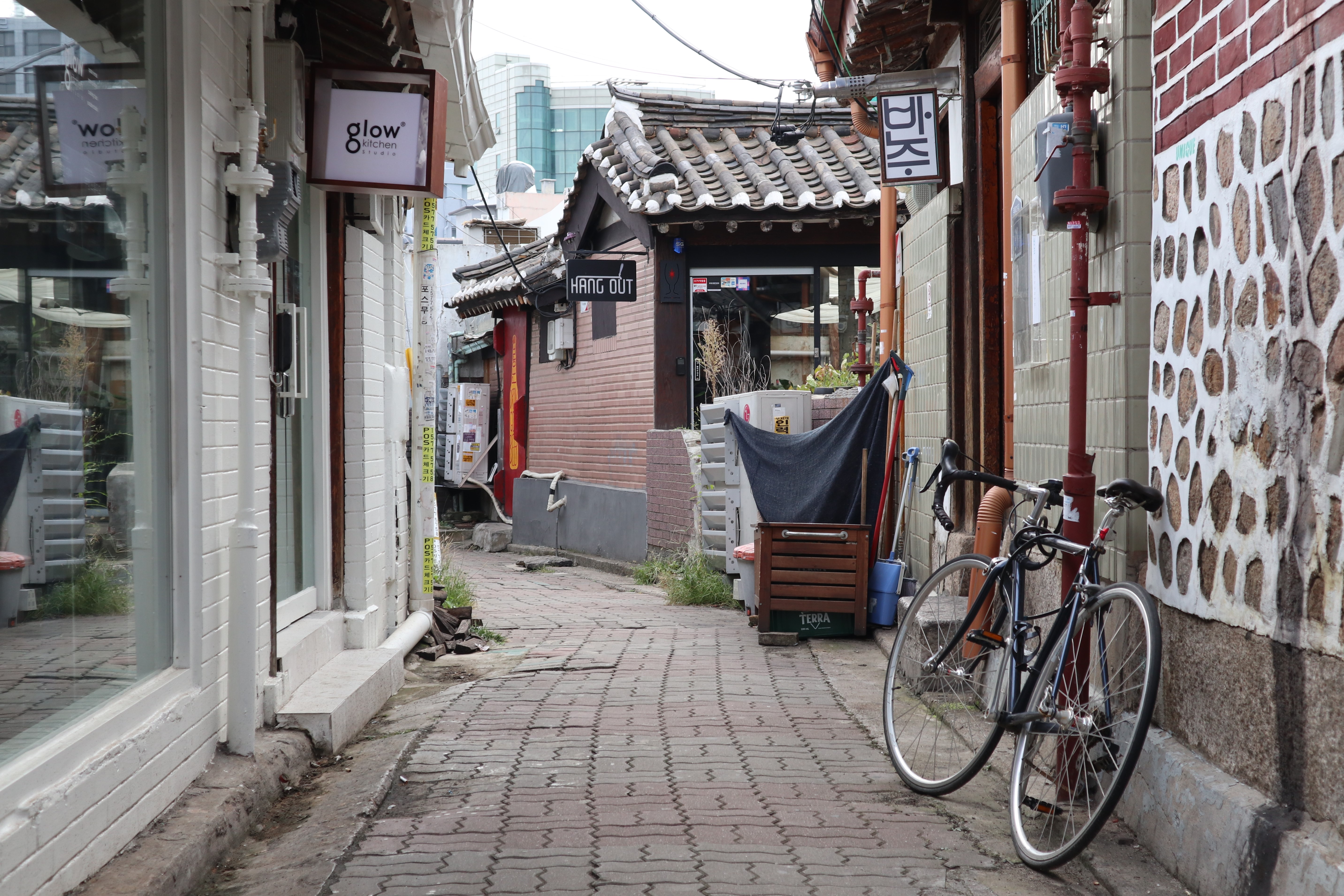
Narrow hanok alley in Ikseon-dong, the traditional Korean house district in Jongno 3-ga, Seoul

Jongno 3-ga just became Seoul’s most talked-about neighborhood for an entirely new reason: in September 2026, Time Out crowned it the world’s coolest neighborhood, jumping up from third place back in 2021. If you’re planning a Korea trip and wondering what actually makes this maze of alleys near Insadong so special, you’re in the right place. This guide breaks down exactly where to go, from the century-old hanoks of Ikseon-dong to the after-dark pojangmacha food stalls that locals have been packing into for decades. Here’s what to see, eat, and do in Jongno 3-ga right now, plus why K-culture fans in particular are going to love it.

Why Jongno 3-ga Just Became the World’s Coolest Neighborhood

In September 2026, Time Out’s global network of local editors and writers ranked Jongno 3-ga the number one coolest neighborhood on Earth, up from third place when it last appeared on the list in 2021. CNN, the Korea Herald, and Korea Times all picked up the story within days, and it’s easy to see why: this stretch of central Seoul, wedged between Insadong and Jongmyo Shrine, has managed to stay genuinely local even as it’s gone viral. Time Out’s write-up specifically praised the mix of century-old hanok alleys in Ikseon-dong, the after-dark boom in pojangmacha (street food tent) culture along Donhwamun-ro 11-gil, and the quieter creative scene growing on Seosulla-gil next to the shrine walls. Unlike some of Seoul’s other trendy districts, Jongno 3-ga has stayed a genuine social mixing ground, where elderly residents running decades-old gukbap restaurants share the same alleys as the young creatives and tourists now flocking in.

Ikseon-dong: Wander the Hanok Alleys That Started It All

Ikseon-dong is the hanok heart of Jongno 3-ga and the reason most visitors show up in the first place: a dense cluster of century-old traditional wooden houses that’s been converted into cafes, boutiques, and photobooths, all packed into alleys narrow enough that you’ll bump shoulders with fellow explorers. Time Out’s own “perfect day” itinerary starts at Mil Toast for fluffy steamed bread, then wanders the perfume, clothing, and eyewear shops that open around 11am. For lunch, Solsot’s pot rice is a local favorite, and Silladang is worth a stop for traditional Korean sweets like gaeseong juak (a chewy glazed rice donut) and yakgwa (a classic honey confection). Getting lost in the maze here really is part of the experience, so don’t over-plan your route, just follow whichever alley looks most interesting.

Narrow hanok alley in Ikseon-dong, the traditional Korean house district in Jongno 3-ga, Seoul
Photo: S h y numis / Wikimedia Commons (CC BY-SA 4.0)

Seosulla-gil: Jewelry, Craft Bars, and Jongmyo Shrine Views

When Ikseon-dong’s crowded lanes start to feel too packed, Seosulla-gil is where Jongno 3-ga slows down. This lane runs alongside the stone walls of the UNESCO-listed Jongmyo Shrine, a Joseon-dynasty royal ancestral shrine built in 1394, and has quietly become the unofficial center of Seoul’s wholesale jewelry trade. Independent designers now sell nature-inspired fine jewelry at shops like Eever Layer, while Slow and Lit stocks handmade crystal trinkets. Cafe SaSa, tucked into a two-story hanok, is known for its mugwort latte and quiet pastry-and-coffee vibe, and craft-beer bar Seoul Gypsy gives the lane a low-key, sophisticated evening scene that’s a nice contrast to the louder pocha crowds a few streets over.

A quiet pond at Jongmyo Shrine in Seoul, the Joseon-era royal shrine next to Seosulla-gil in Jongno 3-ga
Photo: Bgag / Wikimedia Commons (CC0)

Pocha Culture: Jongno 3-ga’s After-Dark Food Scene

The single biggest reason Jongno 3-ga is buzzing right now is its pojangmacha (street food tent) revival. These orange-tented stalls were once just a fast, cheap dinner stop for laborers and office workers on their way home, but young locals have reclaimed them, drawn by the low prices and unpretentious, plastic-stool charm. Head to Donhwamun-ro 11-gil starting around 5pm and you’ll find tables filling up with pajeon (savory seafood-and-kimchi pancakes), grilled eel, charred squid, tteokbokki, and ramyeon, plus the notorious live octopus dish sannakji for anyone feeling brave. In autumn, ginkgo trees around the neighborhood turn gold and drop a carpet of yellow leaves, making crisp evenings under the pocha tarps especially atmospheric. If you overdo it on the makgeolli, the trendy Moxy Seoul Insadong hotel is conveniently right next door.

Night street food stalls with orange tents in Korea, evoking Jongno 3-ga's pojangmacha pocha culture
Photo by Gije Cho on Pexels.com

Best Time to Visit and How to Get There

Getting to Jongno 3-ga is easy: it sits right on Seoul Subway Lines 1, 3, and 5, with exits 4 and 6 dropping you straight into Ikseon-dong and the pocha streets. Autumn (September through November) is the best season to visit, thanks to the neighborhood’s ginkgo trees turning gold and the pocha season hitting its stride in the cool evening air, but Ikseon-dong’s cafes and shops are worth a daytime visit any time of year. Plan for a late afternoon start, browsing Ikseon-dong’s shops and cafes before the crowds pick up, then work your way to Seosulla-gil for a quieter break, and finish at the pocha tables on Donhwamun-ro 11-gil once the sun goes down. Most shops open around 11am, and the pocha scene really gets going from 5pm onward.

Frequently Asked Questions About Jongno 3-ga

Is Jongno 3-ga safe to explore at night?

Yes. The pocha streets are busy with locals and visitors well into the evening, and the area around the subway exits stays well-lit and lively. As with anywhere in Seoul, normal city precautions apply, but Jongno 3-ga’s late-night crowds are actually part of what makes it feel safe and welcoming after dark.

Is Jongno 3-ga still a local neighborhood, or has it become too touristy?

It’s genuinely both, which is exactly what Time Out praised. Elderly residents still run decades-old gukbap restaurants and barbershops in the same alleys where young creatives and international visitors now gather, and the neighborhood has resisted the kind of full gentrification that’s changed other trendy Seoul districts. That said, Ikseon-dong in particular does get crowded, especially on weekends, so visiting on a weekday or arriving earlier in the day can mean a calmer experience.

Jongno 3-ga earns its new title by being both a genuine slice of old Seoul and one of its most exciting food-and-culture scenes right now, and that’s a rare combination for a neighborhood that’s just gone viral. Whether you spend your day wandering Ikseon-dong’s hanok alleys, browsing handmade jewelry on Seosulla-gil, or pulling up a plastic stool at a pocha table after dark, you’re getting a side of Seoul that’s stayed real even while the world was watching. Add it to your Korea itinerary alongside the bigger-name districts, and give yourself more time here than you think you’ll need, this is a neighborhood built for wandering, not checking off a list.

Learn more about KWaveDaily on our About page.

Read Time Out’s full coverage of Jongno 3-ga’s world’s coolest neighborhood ranking.

New Recruit 4: Sabotage: Everything to Know About K-Drama’s Record-Breaking Military Comedy Before the Finale

Actor Lee Won-jung, who plays the mysterious new recruit Kim Hyun-wook in New Recruit 4: Sabotage, the K-drama military comedy heading into its finale

New Recruit 4: Sabotage is the K-drama military comedy everyone in Korea is suddenly talking about, and its September 29 finale is only days away. The fourth season of ENA’s long-running “New Recruit” franchise follows newly-promoted corporal Park Min-seok as a mysterious ace recruit, a modernizing new commander, and a tense rivalry-turned-alliance with the marines shake up his unit. Since its August 24 premiere, the show has climbed to a record-breaking 4.6% nationwide rating for the franchise, making it one of the buzziest military comedies on Korean TV right now. If you’re just discovering the series, or you’ve been watching and want the full picture before the finale, here’s everything international K-culture fans need to know about the cast, the real web-animation origins, the biggest moments so far, and where to stream it outside Korea.

What Is New Recruit 4: Sabotage About?

“New Recruit” is a hyper-realistic military black comedy that began as a YouTube web-animation and has aired four live-action TV seasons on ENA since 2022. Season 4, subtitled “Sabotage,” picks up with Park Min-seok (Kim Min-ho) now promoted to corporal for the second half of his mandatory service. Just when he hopes for a quieter run, a new recruit named Kim Hyun-wook (Lee Won-jung) arrives, an efficient, exceptionally skilled soldier who was Min-seok’s fellow trainee back at boot camp and is hiding a secret tied to Min-seok’s past. At the same time, a new battalion commander, Byeon Hyeok-jin, pushes to modernize the barracks, forcing company commander Jo Baek-ho (Oh Dae-hwan) into difficult calls, while former private Choi Il-goo returns to the unit, this time as a sergeant who has to navigate his old friendships from the other side of the rank line.

Actor Lee Won-jung, who plays the mysterious new recruit Kim Hyun-wook in New Recruit 4: Sabotage
Photo: K-POPIT 케이팝잇 / Wikimedia Commons (CC BY 3.0)

Meet the Cast: Who’s Who in the Second Company

The cast blends returning franchise favorites with new arrivals. Kim Min-ho reprises Park Min-seok, the corporal whose privileged background as “the general’s son” has followed him through three previous seasons. Lee Won-jung, fresh off Netflix’s “Hierarchy,” plays the new recruit Kim Hyun-wook, whose exemplary record hides an untold history connected to Min-seok. Oh Dae-hwan returns as company commander Jo Baek-ho, the long-suffering officer who has to keep the unit together under pressure from above, while Nam Tae-woo’s Choi Il-goo, once a lowly private, now returns as a sergeant caught between his old bonds with the enlisted men and his new authority. Lee Hyun-kyun plays incoming battalion commander Byeon Hyeok-jin, whose push to “modernize the barracks” becomes a major source of season 4’s conflict, and Kim Dong-jun rounds out the unit as Jeon Se-kye.

Actor Oh Dae-hwan, who plays company commander Jo Baek-ho in New Recruit 4: Sabotage
Photo: K-POPIT 케이팝잇 / Wikimedia Commons (CC BY 3.0)

From a YouTube Web-Animation to Korea’s Longest-Running Military Comedy

What makes “New Recruit” different from most military K-dramas is where it came from. The franchise is adapted from a YouTube animated series by creator Jang Bbi-jju (장삐쭈), whose sketches about the absurdities of mandatory Korean military service built a huge online following before ENA turned it into a live-action show in 2022. Each season has followed the same core unit through different chapters of Park Min-seok’s service, from raw private to, now, seasoned corporal, letting original cast members age into new ranks alongside the character. That continuity is part of the appeal: Season 4 rewards long-time viewers by flipping the dynamic, with Choi Il-goo, once bullied as a rookie, now issuing orders to soldiers newer than he once was. New viewers can still follow Season 4 on its own, but the show’s writers clearly lean on four seasons of built-up history between these characters.

Republic of Korea Army soldiers during a joint training exercise, illustrating the real military setting behind the New Recruit comedy franchise
Photo: U.S. Army photo by Sgt. Charles Leitner / Wikimedia Commons (Public Domain)

Inside the Record-Breaking Ratings and the Marines Storyline

New Recruit 4: Sabotage has been breaking its own franchise’s ratings records as it airs, hitting a nationwide 4.6% (Nielsen Korea, paid households) by mid-September, the highest mark the series has posted. A big part of the momentum has come from the show’s ongoing rivalry-turned-teamwork arc between Min-seok’s Second Company and a visiting unit of Republic of Korea Marines. Episodes 7 and 8 set up a tense, comedic clash between the two units during a joint “Hoguk” military exercise, and by episodes 9 and 10, that friction resolved into an unexpectedly moving sequence, with the soldiers and marines completing a mountain rescue mission together and building real camaraderie after their rough start. It’s the kind of tonal swing between slapstick and genuine emotion that has defined the “New Recruit” franchise since its animated origins, and it’s a big reason critics and fans keep pointing to Season 4 as the strongest entry yet.

Republic of Korea Marines during a live-fire training exercise, echoing the marine storyline in New Recruit 4: Sabotage
Photo: Cpl. Peyton Kahle / Wikimedia Commons (Public Domain)

What to Expect From the September 29 Finale

With the finale airing September 29 in Korea, reporting on the back half of the season has teased a suspenseful final stretch: more marine-unit clashes, heartfelt farewells as characters near the end of their service, and a “hidden sabotage” plot thread finally coming to light, a fitting payoff for a season subtitled “Sabotage.” Given the mystery still surrounding Kim Hyun-wook’s connection to Min-seok’s past, expect the finale to resolve exactly what he’s been hiding and how it reshapes the Second Company’s dynamic one last time. True to the franchise’s tone, though, don’t expect a dark, twisty ending, “New Recruit” has always balanced its sharper social commentary about military life with genuine warmth for its characters, and past seasons have wrapped up with a mix of laughs and sentimental send-offs rather than cliffhangers.

Where to Watch New Recruit 4: Sabotage Outside Korea

International fans don’t have to wait for a same-day Korean broadcast to catch up. Rakuten Viki carries New Recruit 4: Sabotage with English and a dozen other subtitle languages, with new episodes rolling out on the platform’s own schedule after they air on ENA. In Japan, U-NEXT picked up the season as a day-and-date exclusive alongside its South Korean premiere. Availability and subtitle languages can vary by region, so check Viki’s regional catalog if you don’t see it right away. Since Season 4 builds directly on relationships from the earlier seasons, especially Choi Il-goo’s arc and Min-seok’s family baggage, it’s worth starting from New Recruit Season 1 if you want the jokes and callbacks to land the way longtime Korean viewers are experiencing them.

Frequently Asked Questions

Do I need to watch the previous New Recruit seasons first?

You can follow Season 4 on its own since it stands alone as a story, but it helps to have seen at least Season 1 (2022). Several running gags, Min-seok’s family connections, and Choi Il-goo’s return as a sergeant all land better with that background, and the franchise is built around watching this specific unit change over time.

Is New Recruit 4: Sabotage based on a true story?

Not a specific true story, but it is rooted in real experience. The franchise began as creator Jang Bbi-jju’s YouTube animation satirizing everyday absurdities of South Korea’s mandatory military service, and the live-action version keeps that hyper-realistic, semi-autobiographical spirit rather than depicting an actual unit or real events.

When and where can international fans watch the finale?

The finale airs in Korea on September 29, 2026, on ENA. International viewers can stream the season, including new episodes as they’re added, on Rakuten Viki with English subtitles, or on U-NEXT in Japan, which carries the show day-and-date with its Korean broadcast.

New Recruit 4: Sabotage has turned a decade-old YouTube joke into one of Korea’s most-watched military comedies, and it’s earned that record-breaking rating by balancing slapstick barracks humor with real heart between its cast of returning and new soldiers. With the marine rivalry resolved into camaraderie and Kim Hyun-wook’s secret still unspoken, the September 29 finale has plenty left to pay off. Whether you catch up before then or wait for the full season to land internationally, it’s a genuinely funny, surprisingly moving watch for anyone curious about Korea’s mandatory military culture.

Learn more about KWaveDaily on our About page.

For the official rundown of Season 4’s cast and characters, see Wikipedia’s New Recruit Season 4 page.

Fin.K.L Is Reuniting After 21 Years: Everything K-Culture Fans Need to Know

Lee Hyori, one of the four original Fin.K.L members reuniting in 2026

Fin.K.L is officially back. On September 21, 2026, the K-pop world got a piece of news longtime fans weren’t sure would ever come: all four original members of Fin.K.L, one of the genre’s most influential first-generation girl groups, confirmed they’re reuniting for real, ongoing full-group activities for the first time in 21 years. If the name Fin.K.L doesn’t ring an immediate bell but Lee Hyori’s does, you’re about to learn why this reunion is such a big deal in K-pop history, who the other three members are, and what a comeback from a 1998 debut act could realistically look like in 2026.

What Actually Happened: Fin.K.L’s September 2026 Reunion Announcement

On Monday, September 21, 2026, management company Gemstone E&M confirmed that Fin.K.L’s four original members, Lee Hyori, Ock Joo-hyun, Lee Jin, and Sung Yu-ri, have reunited under the Fin.K.L name and are preparing for full-group activities. Gemstone E&M, which will handle overall planning and management in cooperation with each member’s individual agency, described the move as a new start for activities as Fin.K.L, specifically drawing a line between this and a one-off reunion.

The company hasn’t announced a release date, single title, or tour yet. Gemstone E&M’s Jason Lee called Fin.K.L an artist with symbolic significance in the history of Korean popular music and said the group’s activities would be revealed sequentially, so expect drip-fed updates rather than one big reveal.

The last time Fin.K.L promoted as a complete group was in 2005, with the digital single Forever Fin.K.L. That makes this genuinely a 21-year gap since their last coordinated release, and it’s the reason this story lit up Korean entertainment news the moment it broke.

Who Is Fin.K.L? Meet K-Pop’s First-Generation Girl Group Icons

If you’re newer to K-pop, Fin.K.L (핑클) is one of two groups, alongside SM Entertainment’s S.E.S., credited with kicking off the first generation of K-pop girl groups. They debuted in 1998 under DSP Media with the album Blue Rain, built around powerhouse R&B vocals, and quickly became one of the biggest acts of the era.

The lineup has stayed the same since their earliest days. Ock Joo-hyun, discovered through a radio singing contest, was the group’s first member and main vocalist. Lee Jin was recruited next after a strong audition. Sung Yu-ri, the youngest, was scouted on a school field trip. Lee Hyori, spotted while taking photo-booth pictures with friends, rounded out the final lineup after an initial fourth member left early on.

Together, the four sold hundreds of thousands of albums, dominated music show rankings, and swept major year-end award ceremonies, laying groundwork that the girl groups of every generation since have built on.

Ock Joo-hyun, Fin.K.L's main vocalist, performing in the Mata Hari musical
Photo: K-POPIT 케이팝잇 / Wikimedia Commons (CC BY 3.0)

Their Signature Hits: Blue Rain, To My Boyfriend, and the Songs That Defined an Era

Fin.K.L’s catalog is packed with songs that are still instantly recognizable to Korean listeners of a certain generation. Their debut single Blue Rain (1998) leaned into moody R&B balladry, a contrast to the cuter, brighter concepts other groups were pushing at the time. It was followed by fan favorites To My Boyfriend and Eternal Love, plus the more upbeat Now, the title track of their 2000 album of the same name, which became one of their signature songs.

Album sales tell part of the story: Blue Rain (1998) moved close to 292,000 copies, White (1999) sold nearly 594,000, Now (2000) sold over 412,000, and Forever (2002) sold around 261,000, huge numbers for the pre-streaming, pre-digital-download Korean music market.

Where Have the Members Been? Their Solo Careers Since Fin.K.L

After slowing down as a group in the mid-2000s, all four members left DSP for separate companies and built genuinely different careers.

Lee Hyori became one of Korea’s most enduring solo pop stars and TV personalities, releasing a string of solo albums and headlining variety shows like Hyori’s Homestay, and more recently joining the SSAK3 and Refund Sisters project groups that became genre-defining moments in Korean variety TV.

Ock Joo-hyun pivoted almost entirely to musical theater, where she’s now considered one of Korea’s top leading ladies, starring in productions like Rebecca and Mata Hari, alongside solo albums and radio hosting work.

Lee Jin and Sung Yu-ri both moved primarily into acting and broadcasting. Lee Jin took roles across Korean film and drama, while Sung Yu-ri built a long list of drama credits, including Thousand Years of Love and Hong Gil Dong, and hosted SBS’s Healing Camp for several years.

The four have popped up together occasionally over the past two decades, most notably a full Fin.K.L reunion performance at a 2008 Lee Hyori concert, but always as one-off appearances rather than ongoing group activity.

Fin.K.L member Lee Jin, who moved into acting and broadcasting after the group's promotions slowed
Photo: acrofan.com / Wikimedia Commons (CC BY-SA 3.0)

Why This Reunion Is Different From Their 2019 Camping Club Comeback

This isn’t even the first time Fin.K.L has reunited on camera. In 2019, all four appeared on JTBC’s variety show Camping Club and released a one-off single, Just Like the Song That Remains, which charted at No. 60 on Korea’s Circle Chart. But both the agency and Korean media have been careful to frame that as a broadcast-tied project, not a resumption of real group activity.

The 2026 announcement is different because it comes with an actual management structure behind it. Gemstone E&M is coordinating planning across all four members’ individual agencies specifically to support ongoing Fin.K.L activities, not a single show tie-in. That’s the detail industry watchers are pointing to as evidence this could be a genuine, sustained comeback rather than another nostalgia moment.

What’s Next for Fin.K.L (And What We Still Don’t Know)

As of this reunion announcement, there’s no confirmed release date, single title, or tour, and Gemstone E&M has said updates will roll out sequentially rather than all at once. Ock Joo-hyun was the first, and so far only, member to publicly react, posting on Instagram with a lyric from Now.

Three things are worth watching: whether Lee Hyori, Lee Jin, or Sung Yu-ri comment individually, whether the comeback opens with a single, full album, or broadcast tie-in, and whether a proper new 2026 group photo appears, since every outlet has so far had to reuse 2019 Camping Club stills or Instagram photos to illustrate the story.

Fin.K.L member Sung Yu-ri, who built a long acting and broadcasting career after the group
Photo: rokiei / Wikimedia Commons (CC BY 2.0 KR)

Fin.K.L Reunion FAQ

Is Fin.K.L really getting back together?

Yes. Agency Gemstone E&M confirmed on September 21, 2026 that all four original members are preparing full-group activities for the first time since 2005, though no release date or tour has been announced yet.

Are all four original members involved?

Yes. Lee Hyori, Ock Joo-hyun, Lee Jin, and Sung Yu-ri are all confirmed to be part of the reunion, with Gemstone E&M coordinating planning across each member’s individual agency.

When will Fin.K.L release new music?

No date has been confirmed. Gemstone E&M says it will reveal Fin.K.L’s activities sequentially, so expect updates in stages rather than one big announcement.

Whatever comes next, Fin.K.L’s 2026 reunion is already a landmark moment for K-pop, proof that the genre’s very first stars can step back into the spotlight on their own terms more than two decades after they first defined what a K-pop girl group could be. For a whole generation of fans discovering this story for the first time, it’s a genuinely rare chance to watch K-pop history come full circle in real time. If this is your first deep dive into Fin.K.L, their catalog and their members’ current work are both worth exploring further before whatever comes next actually drops.

Learn more about KWaveDaily on our About page.

Read Fin.K.L’s full history and discography on Wikipedia.
Chuseok in Korea 2026: What K-Culture Fans Need to Know Before You Go

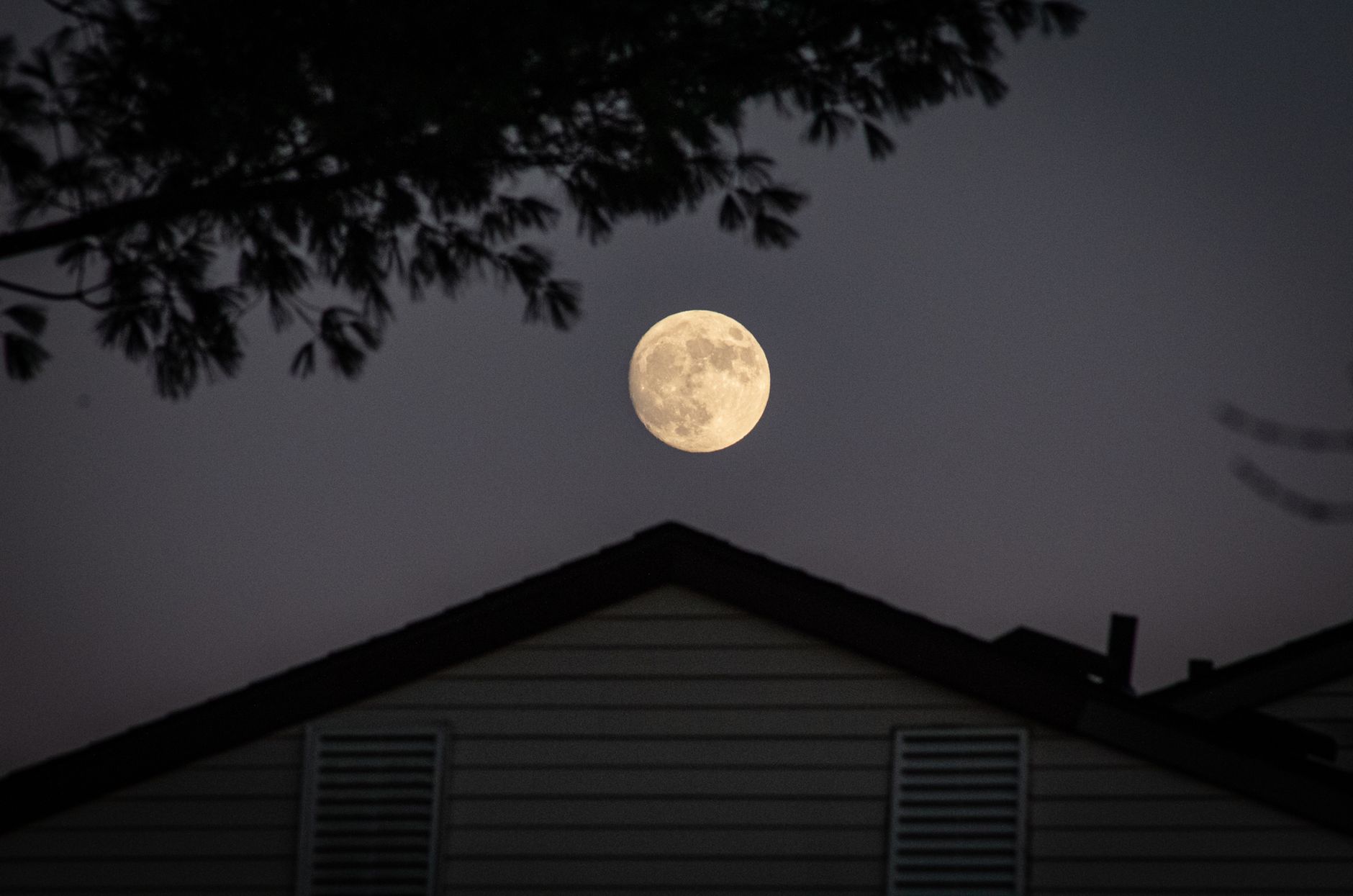
Full moon in the night sky during Chuseok, Korea's harvest moon festival

Chuseok, Korea’s biggest harvest moon festival, falls on Friday, September 25, 2026, with the official holiday running from Thursday, September 24 through Saturday, September 26. If you’re a K-drama, K-pop, or Korea travel fan planning a trip around this date, you might be wondering whether everything shuts down, or whether it’s actually one of the best times to visit. The good news: most major palaces, theme parks, and tourist areas stay open, and several even host free admission and special traditional events you won’t see any other time of year. This guide breaks down exactly what’s open, what’s closed, and the best ways to experience real Korean culture during the 2026 Chuseok holiday.

Full moon in the night sky during Chuseok, Korea's harvest moon festival
Photo by Dan Hadley on Pexels.com

What Is Chuseok, Korea’s Harvest Moon Festival?

Chuseok, also called Hangawi, is one of Korea’s three biggest traditional holidays alongside Seollal (Lunar New Year). It falls on the 15th day of the 8th lunar month, which lands on September 25 in 2026, and celebrates the year’s harvest with family gatherings, ancestral rites called charye, and grave visits known as seongmyo. Families share songpyeon, half-moon-shaped rice cakes, and spend the holiday giving thanks for a good year. For travelers, Chuseok offers a rare window into living tradition, since palaces, museums, and folk villages roll out cultural performances and hands-on programs that aren’t available the rest of the year.

When Is Chuseok 2026, and What Actually Closes?

The official Chuseok holiday in 2026 runs from Thursday, September 24 through Saturday, September 26, with Chuseok Day itself falling on Friday, September 25. Contrary to what many first-time visitors assume, Korea does not shut down during the holiday. Subways and city buses run on their normal schedules throughout, though some services run later than usual on Chuseok Day and the day after as travelers head home. Major department stores, some restaurants, and small family-run shops often close on Chuseok Day itself, but convenience stores, cafe chains, and shops in tourist districts like Myeongdong and Hongdae typically stay open. If you’re traveling between cities, book train or express bus tickets as early as possible, since seats sell out fast during major holidays, and it’s worth having a rental car as a backup plan.

Free Palace Admission You Won’t Want to Miss

During the Chuseok holiday, Seoul’s four major royal palaces, Gyeongbokgung, Changdeokgung, Deoksugung, and Changgyeonggung, all offer free admission, along with Jongmyo Shrine and all 40 Royal Tombs of the Joseon dynasty. It’s one of the few times of year you can explore Joseon-era architecture and royal culture without paying an entry fee. Major museums like the National Museum of Korea and the four branches of the National Museum of Modern and Contemporary Art are generally closed on Chuseok Day itself but reopen for the rest of the holiday, making them a solid indoor option if the weather doesn’t cooperate. Around 40 national recreational forests across the country also waive admission fees during the holiday, though camping platforms and accommodations still charge as usual.

Person wearing traditional Korean hanbok, a popular Chuseok holiday tradition
Photo by ki-mock koo on Pexels.com

Where to See Hanbok, Folk Games, and Moonlight Festivals

Namsangol Hanok Village in central Seoul is the best single spot to soak up the festive atmosphere, hosting the Namsan Moonlight Madang from September 25 to 27 with traditional performances, a hanbok experience, folk games, and a K-food market. Renting a hanbok is still a beloved Chuseok tradition, especially near palaces, since wearing one often gets you free entry to sites like Changdeokgung’s Secret Garden. Other highlights include ganggangsullae, a moonlit circle dance where people join hands under the harvest moon, and talchum, a traditional masked dance drama recognized by UNESCO. Outside Seoul, the Korean Folk Village near Yongin and Jeonju Hanok Village, home to roughly 700 traditional houses, both run hands-on folk game programs throughout the holiday, while Andong hosts its annual Maskdance Festival from September 24 through October 4.

Chuseok Foods Every K-Culture Fan Should Try

Songpyeon is the signature Chuseok food: half-moon-shaped rice cakes filled with sesame seeds, soybeans, or red beans and steamed over pine needles, which gives them a subtle nutty fragrance. The half-moon shape represents a waxing moon, symbolizing growth and prosperity for the year ahead. Alongside songpyeon, holiday tables are loaded with jeon, savory pancakes made from meat, seafood, or vegetables coated in egg, and japchae, glass noodles stir-fried with vegetables. If you want a hands-on taste of the holiday, Mapo Jeon Alley in Seoul is packed with stalls serving fresh-made kimchijeon and bindaetteok, and several Korean cooking studios run seasonal classes where you can make your own songpyeon and jeon from scratch.

Traditional Korean songpyeon rice cakes, a signature Chuseok holiday food
Photo by 8pixelz _ on Pexels.com

Best Theme Parks and Attractions During the Holiday

If tradition isn’t your main draw, Everland and Lotte World both stay open throughout Chuseok, and crowds are often lighter since many locals spend the holiday with family outside the city. N Seoul Tower on Namsan Mountain is also open, with shorter lines than usual and sweeping views that are especially striking under the harvest moon. Coex Mall and Gwangjang Market may close briefly on Chuseok Day itself but reopen quickly, while Hongdae tends to be quiet in the morning and lively again by evening, so plan big shopping or nightlife trips for the second or third day of the holiday.

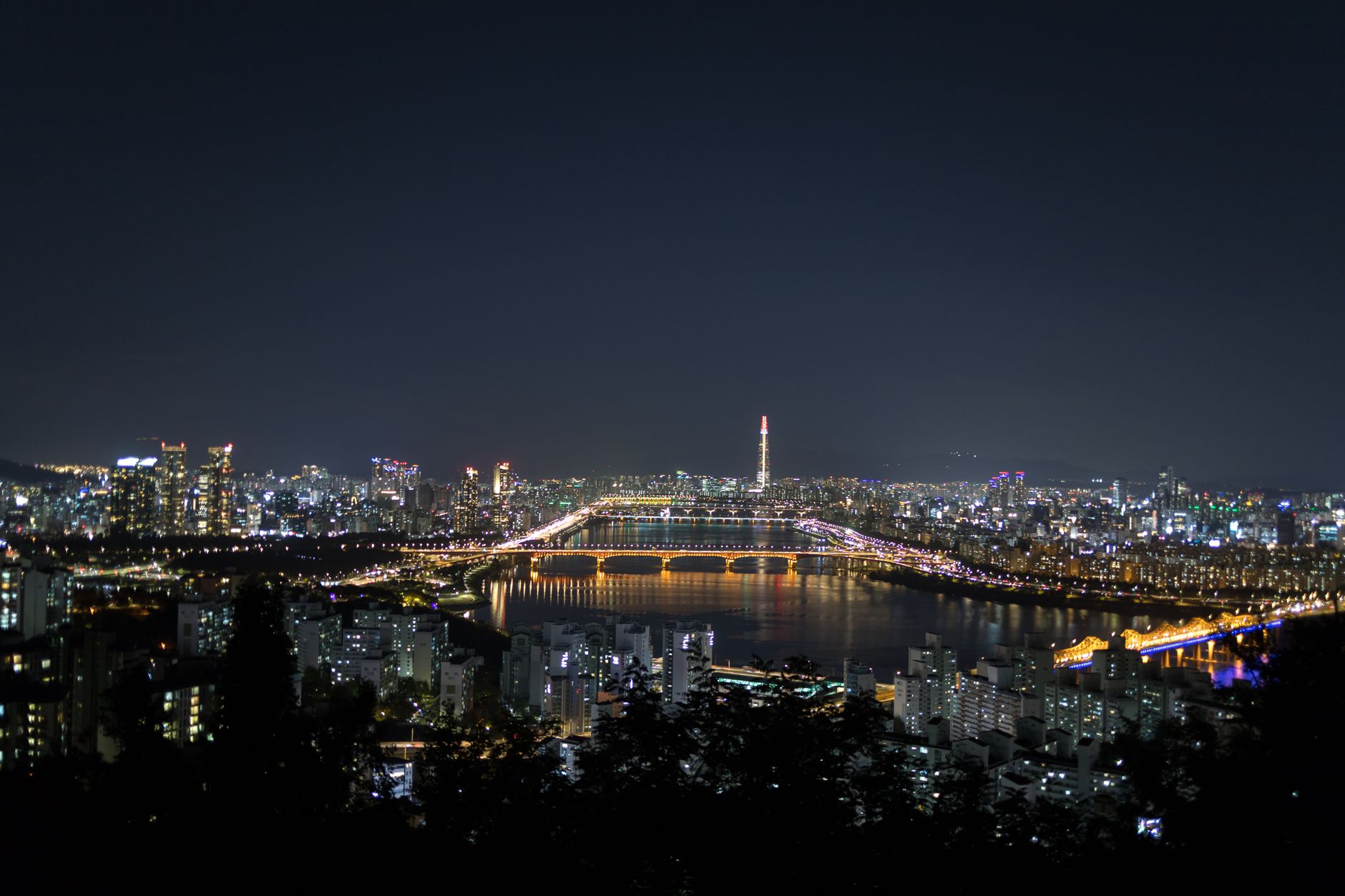
Seoul city skyline at night, a highlight for visitors during the Chuseok holiday
Photo by O-seop Sim on Pexels.com

Chuseok Travel FAQ

Is everything closed during Chuseok?

No. Most tourist attractions, convenience stores, cafe chains, and shops in tourist districts stay open throughout the holiday. Department stores and small family-run restaurants are the most likely to close, and mainly just on Chuseok Day itself, September 25.

Do I need to book transportation in advance?

Yes, if you’re traveling between cities. Train and express bus tickets sell out quickly during Chuseok, so book as early as possible and consider having a rental car as a backup. Subways and city buses within cities run on their normal schedules throughout the holiday.

Is renting a hanbok worth it during Chuseok?

Yes, especially around Chuseok. Wearing a hanbok is one of the holiday’s core traditions, and it often gets you free entry to palaces like Gyeongbokgung and Changdeokgung, plus special access to sites like Changdeokgung’s Secret Garden. Rental shops cluster near most major palaces and Namsangol Hanok Village.

Far from being a holiday to avoid, Chuseok 2026 might be one of the best windows to experience Korea beyond the usual tourist checklist. Between free palace admission, moonlit folk performances, and once-a-year foods like songpyeon, you get a genuine taste of Korean tradition alongside the K-pop and K-drama sights most travelers already have on their list. Just book your intercity transport early, keep a flexible backup plan for Chuseok Day itself, and you’ll have one of the most memorable trips to Korea you can plan around a single date on the calendar.

Learn more about KWaveDaily and what we cover.

Read more about the history and traditions of Chuseok on Wikipedia.

Made in Korea Season 2: The Real 1979 History Behind Hyun Bin’s Political Thriller

Actor Hyun Bin, who stars as Baek Ki-tae in Made in Korea Season 2, the biggest-budget K-drama political thriller of 2026

Made in Korea Season 2 has become the K-drama everyone’s talking about this September, and it’s not just because Hyun Bin returns as the ruthless KCIA operative Baek Ki-tae. The Disney+ and Hulu political thriller, reportedly one of the most expensive Korean dramas ever produced, weaves its fictional power struggle directly into a real, dramatic chapter of South Korean history: the 1979 assassination of President Park Chung-hee. If you’ve been wondering how much of Made in Korea Season 2 is actually true, here’s the real 1970s history behind the show, from the KCIA’s rise to the shocking dinner that changed the country forever.

What Is Made in Korea Season 2 About?

Made in Korea Season 2 picks up nine years after the first season’s finale, moving the story into 1979. Baek Ki-tae (Hyun Bin) is no longer a mid-level KCIA agent smuggling drugs on the side; he’s now Deputy Director of the agency, holding real institutional power. His long-time rival, former prosecutor Jang Geon-young (Jung Woo-sung), returns from years away to close in on him, while Ki-tae’s own younger brother, Baek Ki-hyun (Woo Do-hwan), gets pulled into the fight from the opposite side of the law. The season uses the 1979 assassination of President Park Chung-hee as the backdrop for a power vacuum that all three men scramble to exploit.

Is Made in Korea Based on a True Story?

Made in Korea blends real history with fictional characters. Baek Ki-tae, his family, and the specific drug-smuggling and political-assassination-plot storylines are all invented for the show. But the world around them is grounded in real events: the KCIA really did wield enormous, largely unchecked power in 1970s and ’80s South Korea, and President Park Chung-hee really was assassinated in October 1979 by his own intelligence chief. The show uses that real turning point in Korean history as the engine for its fictional power struggle, rather than trying to dramatize the actual assassination plot beat for beat.

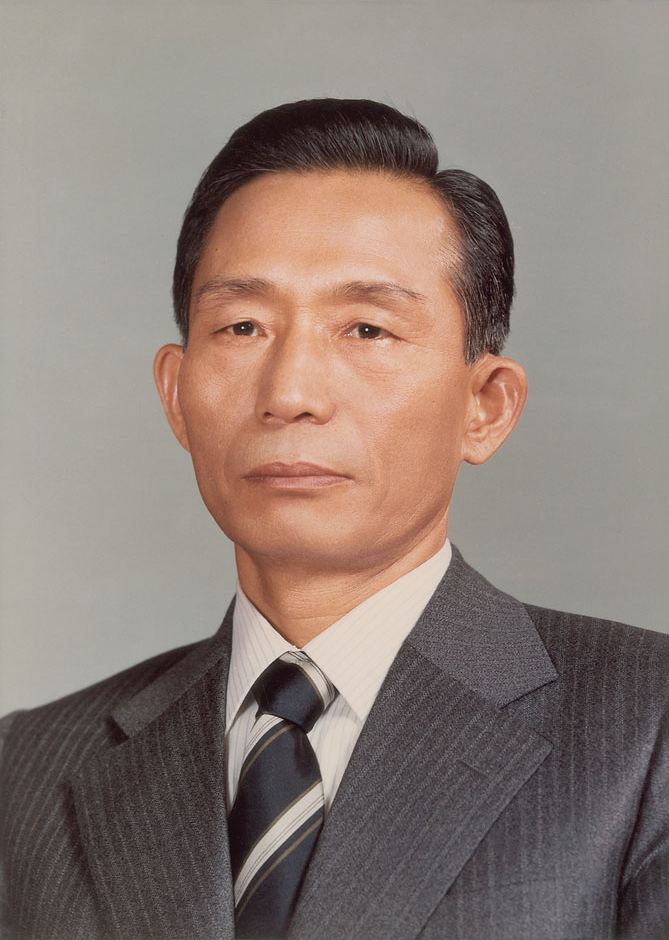
Official presidential portrait of South Korean President Park Chung-hee, whose 1979 assassination is the real historical backdrop for Made in Korea Season 2
Photo: Korea.net / Korean Culture and Information Service, via Wikimedia Commons (CC BY-SA 2.0)

The Real 1979 Assassination of President Park Chung-hee

On October 26, 1979, President Park Chung-hee, who had ruled South Korea for 18 years, was shot dead during a private dinner at a KCIA safehouse near the Blue House. The shooter was Kim Jae-gyu, his own KCIA director and one of his closest allies. After a tense exchange about how to handle growing anti-government protests, Kim left the room, returned with a handgun, and shot both Park and the president’s chief bodyguard, Cha Ji-cheol. Park’s rigid authoritarian Yushin era ended in that single moment, plunging the country into a power vacuum that eventually led to a new military coup that December. Kim Jae-gyu was tried, convicted, and executed in 1980; his family has pursued a retrial for decades, arguing he acted to restore democracy rather than seize power himself.

Cheong Wa Dae (the Blue House), the seat of the South Korean presidency, near where President Park was killed in 1979
Photo: Republic of Korea / Jeon Han, KOCIS, via Wikimedia Commons (CC BY-SA 2.0)

The KCIA’s Real History of Fear and Power in 1970s Korea

The Korean Central Intelligence Agency, founded in 1961, was the tool President Park used to consolidate and hold onto power for nearly two decades. Under Park’s Yushin Constitution of 1972, the KCIA had sweeping authority to surveil politicians, journalists, and ordinary citizens, and it operated with almost no outside oversight. That real unchecked power is exactly what Made in Korea Season 2 dramatizes through Ki-tae’s rise: a KCIA official who uses his badge as cover for a criminal empire is fiction, but the agency’s real-world reputation for corruption, intimidation, and backroom deal-making is very much rooted in fact. Even the show’s broader political intrigue, alliances between generals, prosecutors, and spies jockeying for position after Park’s death, mirrors the genuinely chaotic scramble for power that followed the real assassination, culminating in Chun Doo-hwan’s military coup that December.

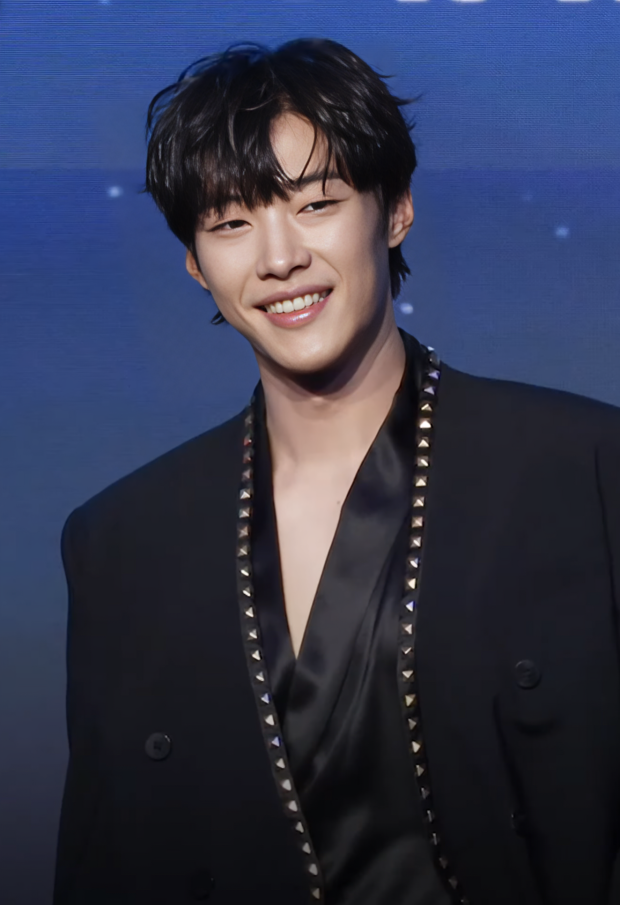
Actor Woo Do-hwan, who plays Baek Ki-hyun, Ki-tae's younger brother, in Made in Korea Season 2
Photo: K-POPIT 케이팝잇, via Wikimedia Commons (CC BY 3.0)

Where to Watch Made in Korea Season 2 (and When It Ends)

Made in Korea Season 2 is streaming exclusively on Disney+ and Hulu, with all six episodes released in pairs on September 9, 16, and 23, 2026. That means the season finale drops September 23, wrapping up the fight between Ki-tae, Geon-young, and Ki-hyun right as the show’s fictional storyline catches up with the real historical chaos of late 1979. Season 1’s six episodes are also available to stream if you want the full origin story of how Ki-tae first built his double life as a KCIA officer and smuggler before the story jumps forward nine years for Season 2.

FAQ: Made in Korea Season 2

Is Made in Korea based on a true story?

Partly. The main characters and their specific criminal plots are fictional, but the show is set against real events, including the KCIA’s real historical power and the actual 1979 assassination of President Park Chung-hee.

Where can I watch Made in Korea Season 2?

Made in Korea Season 2 is streaming on Disney+ and Hulu. Episodes are being released in pairs, with the final two episodes arriving on September 23, 2026.

Will there be a Made in Korea Season 3?

Disney+ has not yet announced a third season. Season 2 was designed to close out the story that began in Season 1, so any renewal decision will likely come after the finale’s reception is clear.

Made in Korea Season 2 works as pure political-thriller entertainment, but it hits harder once you know the real history underneath it. The KCIA’s real reach, President Park’s real assassination, and the real power vacuum that followed all give Ki-tae, Geon-young, and Ki-hyun’s fictional battle its weight. As the finale lands this week, it’s worth remembering that South Korea’s actual 1979 turning point was every bit as dramatic as anything happening on screen.

Learn more about KWaveDaily and what we cover

Read more about the real 1979 assassination on Wikipedia

BLACKPINK’s 2026 Solo Era Explained: Every Member’s Comeback From Jennie to Rosé

BLACKPINK’s 2026 solo era has turned into the group’s busiest stretch of individual music yet, with Jennie, Lisa, Jisoo, and Rosé each releasing new solo music within weeks of one another. The run started right after BLACKPINK’s 10th debut anniversary on August 8, 2026, and by mid-September all four members had dropped a song, with three of them landing within an eight-day window alone. Each release sounds completely different, from Jennie’s hushed acoustic-pop confession to Rosé’s playful pop-rock detour, which is exactly what makes this BLACKPINK solo season worth breaking down. Here’s what actually came out, when, and why BLINKs everywhere are still comparing notes.

Why 2026 Became BLACKPINK’s Biggest Solo Year Yet

BLACKPINK marked ten years since their 2016 debut on August 8, 2026, celebrating with a small fan event capped at just 40 attendees at the National Museum of Korea, a scale that drew some criticism from fans hoping for something bigger. Jisoo was seen in tears at the event after receiving handwritten letters from fans. With the group’s “Deadline” world tour and third EP wrapped, the four members turned their attention back to their own projects, and unlike earlier hiatus periods, this time all four run mostly independent schedules. Rosé still releases through YG Entertainment, while Jennie, Lisa, and Jisoo have each built their own labels. No agency has confirmed the four solo runs are building toward a group project of any kind; as of this writing, the overlapping timing appears to be a coincidence of each artist’s own album cycle rather than a coordinated rollout.

BLACKPINK members Jisoo, Jennie, Rosé, and Lisa collage, all four going solo in 2026
Photo: 티비텐 (TV10) / Wikimedia Commons (CC BY 4.0)

Jennie’s “Fallen Angel”: A Quiet, Personal EP

Jennie opened BLACKPINK’s 2026 solo run on August 28 with “Fallen Angel,” a three-track digital EP released through her own label Odd Atelier and Columbia Records, about a year and five months after her debut solo LP “Ruby.” The label called it “a gift from JENNIE, with love,” and the tracklist leans intimate: the acoustic-pop title track “Fallen Angel,” the lo-fi alternative ballad “Less Than a Lover,” and “Heaven.” A physical CD edition arriving October 30 expands the project to six songs, adding three previously unreleased tracks, “Sweet Tooth,” “Lock It Down,” and “Face.” Compared to the sharper, more image-driven rollout around “Ruby,” this release feels deliberately low-key, more like a personal diary entry than a big pop statement, and that tonal shift is a big part of why fans have been calling it one of her most vulnerable projects yet.

Jennie of BLACKPINK at a Chanel event, May 2026, promoting her solo EP Fallen Angel era
Photo: 티비텐 / Wikimedia Commons (CC BY 4.0)

Lisa’s “SaWaDiKa”: Thai Roots, Hip-Hop, and a Movie Premiere

Lisa followed on September 3 with “SaWaDiKa,” released at 9 a.m. KST through her own label Lloud Co. and RCA Records via Sony Music Entertainment Korea. The title comes from the Thai greeting “sawatdee ka,” or “hello,” and the hip-hop-driven track leans directly into her Thai heritage, with a rollout that included red “HELLO SAWADIKA” billboards across Thailand. It’s the lead single from her upcoming six-track EP “Press Play,” due October 23, 2026. Lisa isn’t stopping at music this era, either: her feature documentary “Always Lalisa” premiered at the Toronto International Film Festival between September 10 and 20, and is set for a limited global cinema and IMAX release on October 12 before streaming on YouTube Premium. She’s also opening her first concert residency, “Viva La Lisa,” at The Colosseum at Caesars Palace on November 13, making this easily her busiest multi-format era since going solo.

Lisa of BLACKPINK at the 2025 Emmys, ahead of her Thai heritage-themed single SaWaDiKa
Photo: The Ghost Orchid / Wikimedia Commons (CC BY-SA 4.0)

Jisoo’s “Click”: Her First Full-Length Album Begins

Jisoo closed out the crowded early-September window with “Click,” released at 1 p.m. KST on September 4 through her label Blissoo and Warner Records. It’s her first solo music since 2025’s EP “Amortage” and her synth-pop duet “Eyes Closed” with Zayn Malik, but more importantly, it’s the first pre-release single from her debut full-length solo album, an untitled project her agency says will include several more songs. The music video, directed by Joseph Kahn (known for Taylor Swift’s “Blank Space” and “Wildest Dreams”), reimagines “Click” as a surreal, glitching amusement-park story with animatronic figures, and Blissoo describes the song itself as capturing an instinctive attraction between two people who know they shouldn’t be drawn to each other but “naturally click” anyway. With three of BLACKPINK’s four members dropping new solo tracks in an eight-day span, “Click” ended up being the closing act of the busiest week of BLACKPINK solo activity so far in 2026.

Jisoo of BLACKPINK at a Dior event, April 2025, ahead of her single Click and debut solo album
Photo: K-POPIT 케이팝잇 / Wikimedia Commons (CC BY 3.0)

Rosé’s “new trick”: The Lightest Song She’s Written Yet

Rosé became the fourth and final member to join the 2026 solo wave, releasing “new trick” at 8 a.m. KST on September 18. Written shortly after the Met Gala, the playful pop-rock track is a deliberate change of pace from the heartbreak-heavy storytelling of her 2024 album “Rosie,” and Rosé herself has described it as one of the lightest, cutest songs she’s ever written. Unlike her three groupmates, who each now run their own independent labels, Rosé still releases her solo work through YG Entertainment, the same agency that manages BLACKPINK as a group. Her arrival rounded out a run where all four members released solo music within about six weeks of each other, following Jennie’s “Fallen Angel” (August 28), Lisa’s “SaWaDiKa” (September 3), and Jisoo’s “Click” (September 4), and gave BLINKs a genuinely full month of new music to dig into from every member at once.

Rosé of BLACKPINK at the Rimowa launch party in Seoul, ahead of her single new trick
Photo: TV10 / Wikimedia Commons (CC BY 3.0)

Which BLACKPINK Comeback Are Fans Loving Most?

With four totally different sounds landing back to back, comparison polls have taken over BLINK social media. One widely shared Instagram poll simply asked, “Which BLACKPINK member released the best comeback song this year?” and drew tens of thousands of votes across Jennie, Lisa, Jisoo, and Rosé, with no single member running away with it. Reactions have split along genre lines as much as member loyalty: fans drawn to Jennie’s stripped-down songwriting on “Fallen Angel” tend to prefer it over the more production-heavy “SaWaDiKa” and “Click,” while others say Rosé’s “new trick” is the most replayable simply because it doesn’t take itself too seriously. Not every reaction has been glowing, either. When Lisa posted a short preview clip ahead of “SaWaDiKa,” one fan on X pushed back on her “diva boss baddie” persona, while other BLINKs defended the song, arguing a 15-second teaser wasn’t enough to judge a full track. That kind of real-time debate, four artists, four aesthetics, one shared fandom arguing it out in the comments, is exactly what’s made this stretch feel like BLACKPINK’s most engaging non-group era yet.

Frequently Asked Questions About BLACKPINK’s 2026 Solo Releases

Is BLACKPINK doing a group comeback in 2026?

Not officially, as of this writing. No BLACKPINK label has confirmed that the four members’ overlapping solo release windows are building toward a group project; Billboard and Yonhap have both reported the shared timing is, so far, the only thing that’s verified. It follows the group’s 10th anniversary and the wrap of their “Deadline” world tour and EP.

Which BLACKPINK solo song of 2026 came out first?

Jennie’s three-track EP “Fallen Angel” was first, releasing August 28, 2026. Lisa’s “SaWaDiKa” followed on September 3, Jisoo’s “Click” landed September 4, and Rosé’s “new trick” closed out the run on September 18, meaning three of the four songs arrived within a single eight-day stretch.

Where can I stream all four members’ 2026 solo releases?

All four songs are available on major streaming platforms, including Spotify, Apple Music, and YouTube Music, listed under each member’s own solo artist page rather than BLACKPINK’s group page. Jennie’s “Fallen Angel” is under Odd Atelier, Lisa’s “SaWaDiKa” under Lloud/RCA, Jisoo’s “Click” under Blissoo/Warner, and Rosé’s “new trick” under YG Entertainment.

Four members, four labels, four completely different sounds, all landing inside the same six-week stretch: that’s the real story of BLACKPINK’s 2026 solo era. Whether you’re team Jennie’s hushed vulnerability, Lisa’s Thai-rooted hip-hop swagger, Jisoo’s cinematic pop, or Rosé’s playful new direction, there’s genuinely something here for every kind of BLINK, and with Lisa’s “Press Play” EP and Jisoo’s debut album still ahead, this stretch of solo output isn’t even finished yet.

More K-Culture guides and explainers on KWaveDaily

Source: Korea Herald coverage of BLACKPINK’s solo comeback lineup

Olive Young Shopping Guide 2026: 15 K-Beauty Must-Buys (Plus Tax Refund Tips)

Korean beauty and cosmetics shopping display representing an Olive Young store

If you only visit one drugstore in Seoul, make it Olive Young. This K-beauty giant has become the go-to first stop for anyone chasing glass skin, viral sheet masks, or the exact sunscreen your favorite skincare influencer swears by, and with locations in Myeongdong, Hongdae, and Gangnam, there’s a branch near almost every tourist route. But with thousands of products crammed onto every shelf, it’s easy to walk out with a bag of impulse buys instead of the things actually worth your suitcase space. This guide breaks down the real, tried-and-tested Olive Young must-buys for 2026 by category, plus the tax refund trick that can save you real money before you even leave the store.

Which Olive Young Store Should You Visit First?

Seoul has Olive Young branches on nearly every major corner, but a few flagship stores stand out for first-time shoppers. Olive Young Myeongdong Town is the largest branch in the country, spread across multiple floors with a dedicated tax refund counter, making it the easiest single stop if you only have time for one visit. Hongdae’s branch tends to stock trending, TikTok-viral products faster than other locations, while the Gangnam flagship is more spacious and less crowded, with a stronger premium-brand selection. If you’re near Seongsu-dong, the newer Olive Young N Seongsu location is worth a look for its Instagram-friendly interior and occasional exclusive drops.

Korean skincare products flatlay representing the wide selection at an Olive Young store
Photo by Polina u2800 on Pexels.com

Best Korean Sunscreens Worth Stocking Up On

Korean sunscreen is genuinely years ahead of most Western formulas: lightweight, no white cast, and built to layer under makeup without pilling. This is the single category most travelers say they wish they’d bought more of. Beauty of Joseon Relief Sun SPF50+ is the most globally hyped pick, a rice-and-probiotic formula that runs around 9,000 to 12,000 won. Round Lab’s Birch Juice Moisturizing Sun Cream is a favorite for drier skin types, while Isntree’s Hyaluronic Acid Watery Sun Gel disappears almost instantly on the skin. Because Korean sunscreen typically costs two to three times more once it’s exported overseas, and Olive Young frequently runs 1+1 (buy one, get one) deals, this is the category worth buying in bulk before you fly home.

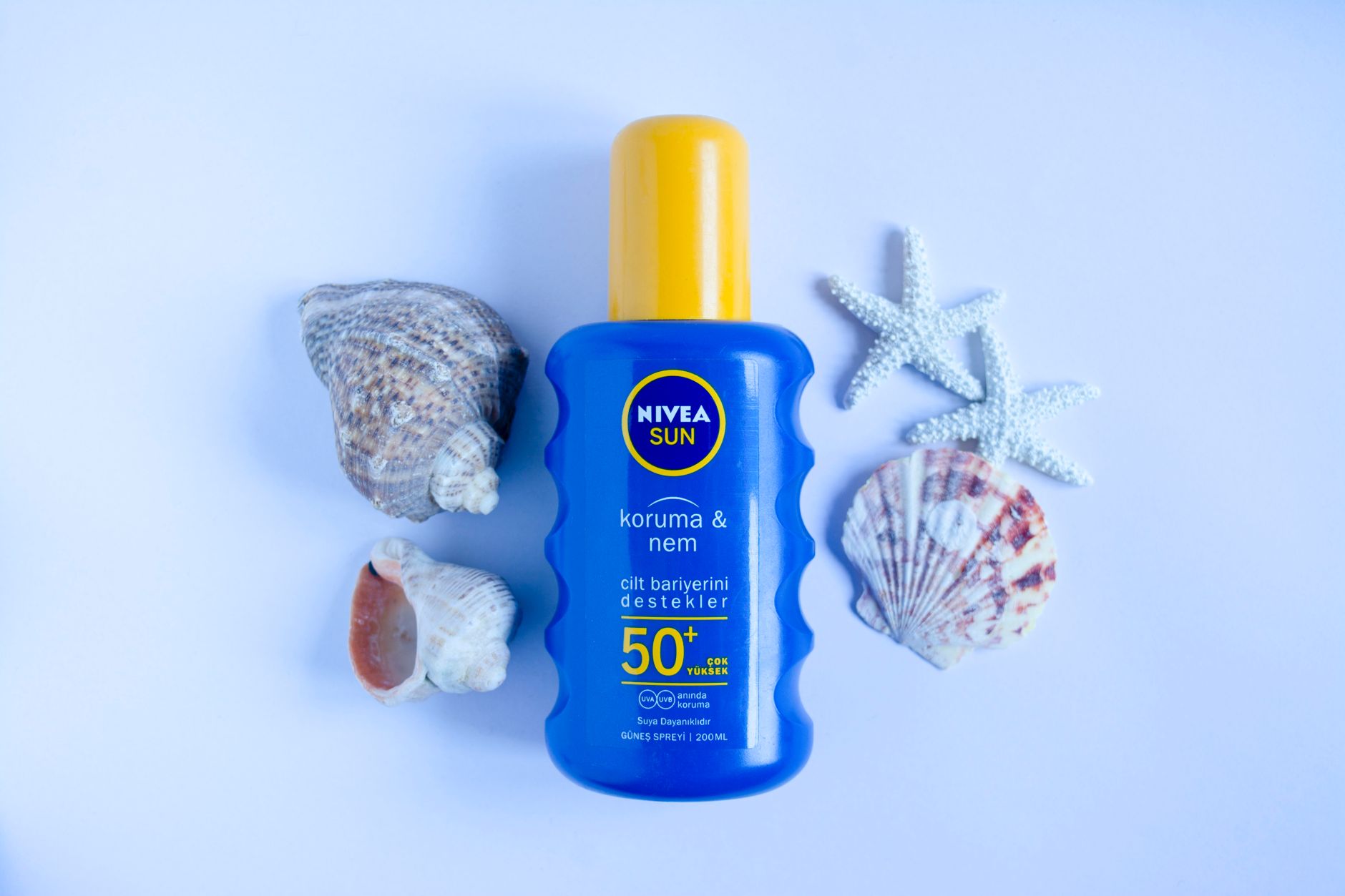
Korean sunscreen bottles, a top must-buy category at Olive Young
Photo by Betu00fcl u00dcstu00fcn on Pexels.com

Best Skincare Picks: Serums, Toners, and Moisturizers

Korean skincare philosophy favors layering several lightweight products over one heavy cream, so the serum and toner aisles are where most of the magic happens. COSRX Advanced Snail 96 Mucin Power Essence remains Korea’s best-selling essence for a reason, prized for calming redness and boosting hydration. Anua’s Heartleaf 77% Soothing Toner is a genuine cult favorite that keeps going viral on TikTok for calming irritation. For brightening, Anua’s Niacinamide 10 TXA 4 serum pairs niacinamide with tranexamic acid to fade dark spots without irritation, and Torriden’s DIVE-IN Low Molecular Hyaluronic Acid Serum is a reliable hydration booster for dry climates. If your skin runs sensitive, Illiyoon’s Ceramide Ato Concentrate Cream is often compared to CeraVe for its no-frills, barrier-repairing formula, and it comes in a large tube that will outlast your trip.

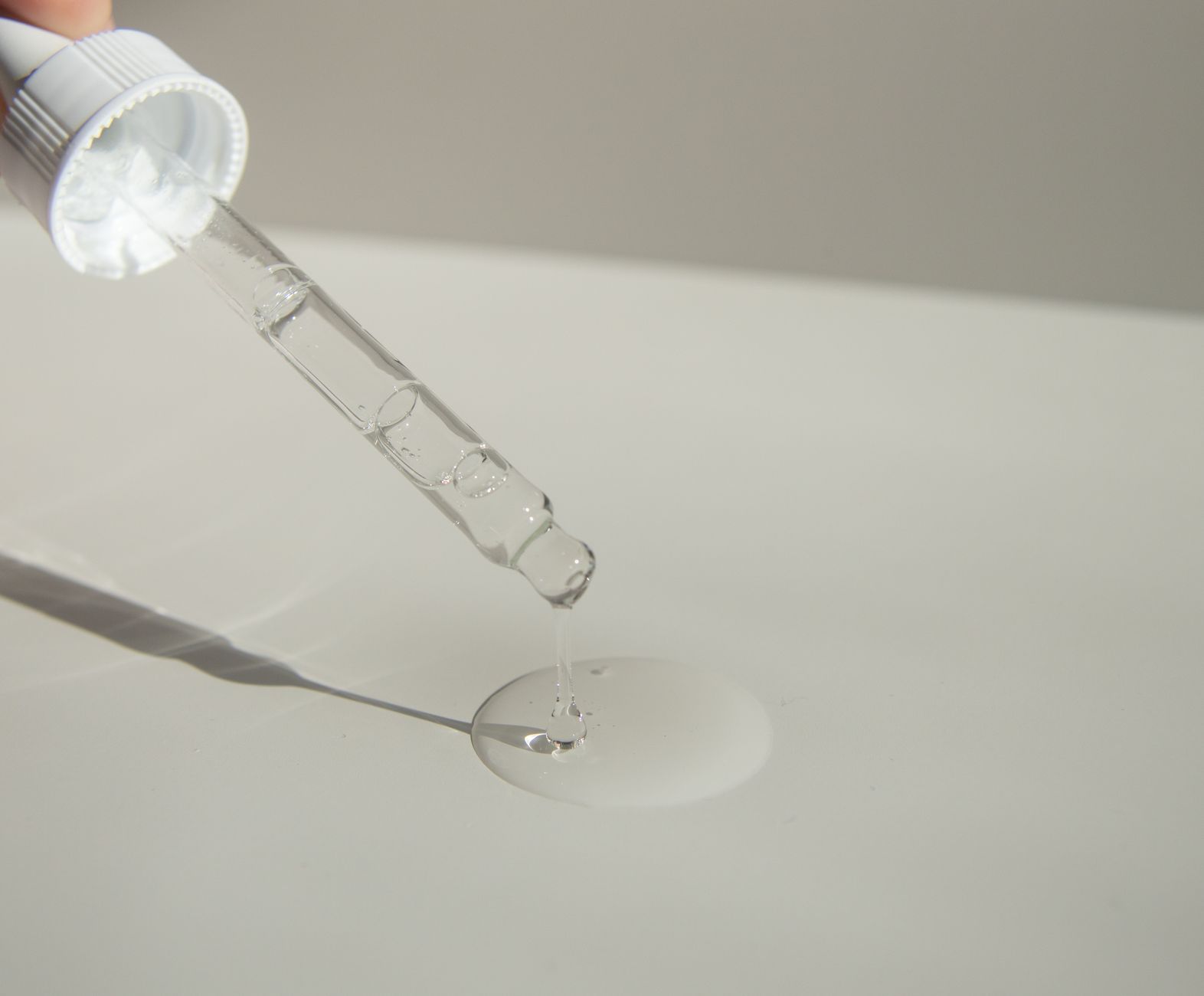
Skincare serum bottle with dropper, representing Korean essence and toner products
Photo by Jill Burrow on Pexels.com

Sheet Masks: The Easiest Souvenir to Bring Home

Sheet masks are the ultimate Korea souvenir: cheap, lightweight, and something literally everyone back home will be happy to receive. Mediheal’s N.M.F Aquaring Ampoule Mask is Korea’s top-selling sheet mask brand, running about 1,000 to 1,500 won per sheet, making it easy to grab a dozen without blowing your budget. Dr. Jart+’s Dermask Water Jet Vital Hydra Solution is the slightly more premium pick if you want to treat yourself, while Abib’s Mild Acidic pH Sheet Mask is a solid choice for sensitive skin. Keep an eye out for Olive Young’s constant “10+10” mask promotions (buy 10, get 10 free), which make stocking up for gifts genuinely worth it rather than just a nice idea.

Person applying a Korean sheet mask, a popular and affordable Olive Young souvenir
Photo by Engin Akyurt on Pexels.com

Makeup Worth Trying: Cushions and Lip Tints

Korean makeup leans into the natural, dewy “glass skin” look rather than heavy full coverage, and cushion foundations are the clearest example of that philosophy. CLIO’s Kill Cover Mesh Glow Cushion is Korea’s best-selling cushion for its natural, glowing finish, while IOPE’s Air Cushion XP is a longtime classic known for holding up through a long day of sightseeing. On the lip side, rom&nd’s Juicy Lasting Tint is the product that arguably started the global lip-tint obsession, with dozens of buildable, long-wearing shades. Peripera’s Ink Airy Velvet Tint is another cult favorite if you want a soft-focus, blurred finish instead of a glossy one. All of these are worth testing at the in-store counters before you buy, since Olive Young’s testers make it easy to check undertone and finish in person.

Korean lip tint and makeup cosmetics, popular Olive Young beauty picks
Photo by pedro furtado on Pexels.com

Don’t Forget the Instant Tax Refund

One of the easiest ways to save money at Olive Young has nothing to do with sale timing: it’s the instant tax refund. As of 2026, any single transaction of 15,000 won or more qualifies for an immediate discount at checkout, up to a total of 5,000,000 won across your entire trip in South Korea, and you’ll need your passport on hand to claim it. Unlike Japan’s sealed tax-free system, South Korea lets you open, test, and use your tax-refunded cosmetics right away during your trip, so there’s no need to keep anything sealed in a bag until you’re home. Larger branches like Myeongdong Town have a dedicated refund counter inside the store, which makes the whole process faster than hunting for a separate kiosk.

Frequently Asked Questions

Is Olive Young worth visiting if I only have one day in Seoul?

Yes. A single well-stocked branch, especially Myeongdong Town, lets you cover sunscreen, skincare, sheet masks, and makeup in one stop, and the tax refund counter is built right into the bigger stores so you don’t need a separate errand.

Do I need cash for the instant tax refund?

No, the instant refund is applied directly at checkout when you pay by card, as long as your single transaction hits the 15,000 won minimum and you show your passport. You don’t need to visit a separate refund kiosk for smaller purchases.

Can I buy Olive Young products online if I miss a trip?

Yes. Olive Young Global ships internationally, and as of 2026 Olive Young also has a dedicated U.S. e-commerce site with domestic shipping, so tariffs and long shipping times are no longer as much of a barrier as they used to be.

Final Thoughts

Olive Young can feel overwhelming on your first visit, but shopping by category instead of by hype makes it far easier to walk out with things you’ll actually use. Stock up on sunscreen and sheet masks since they’re the best value-per-won, test cushions and lip tints in person before committing to a full size, and always keep your passport handy for the instant tax refund. Whichever branch you end up at, a little planning turns Olive Young from a chaotic maze into one of the most satisfying parts of a Korea trip.

Learn more about KWaveDaily on our About page.

For more on Korean beauty retail, see Olive Young’s official Wikipedia page.